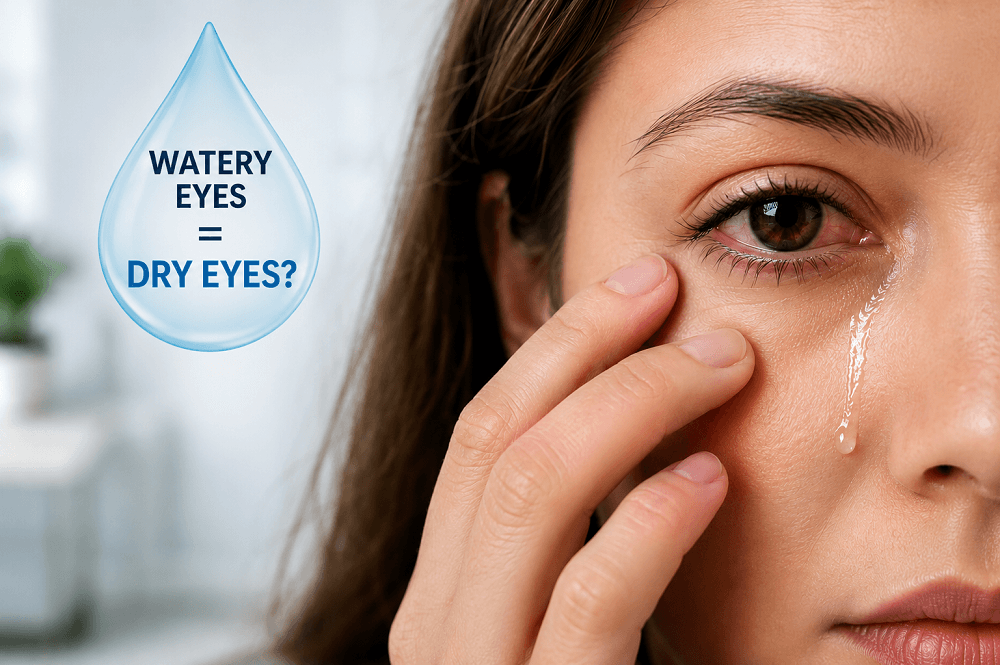
If you have ever wondered, “Why are my eyes always watery?” you are not alone. Excessive tearing is often associated with eye infections or allergies; however, it can also signal the exact opposite problem: dry eyes. Yes, as contradictory as it may sound, for many people, watery eyes can sometimes be a sign that the tear film isn’t functioning as effectively as it should.” Though the confusing symptom of watery eyes, which can signal dry eyes, catches many people off guard, it is the eye’s natural defense against dryness.
The blog explains the watery eye paradox, why it happens, what else could be causing it, and when it’s worth getting checked out.
Why do watery eyes feel counterintuitive?
Watery eyes, when perceived as a normal symptom, indicate wet eyes, not dry, so upon consulting, why would an optometrist ever link the two?
The answer is reflex tearing. To break it down, the eye produces many types of tears for different purposes, including reflex tears that are produced in response to irritation and basal tears that keep the eye lubricated.
One that acts as a steady, slow layer of moisture that promotes sustained comfort for the ocular surface all day. The other is an emergency response. The tears occur due to environmental triggers when exposed to smoke, cold air, wind, or excessive screen time. This causes the eyes to dry out and causes the glands to produce extra tears in response to dryness.
Once the problem sweeps away, the eyes should stop watering. If the protective tear layer doesn’t function properly, the eye’s surface becomes irritated. As a result, this irritation triggers an emergency response even when there is no obvious cause. The eyes keep watering on and off all day when there isn’t an obvious external trigger.
How Do Dry Eyes Trigger Watery Eyes?
The irritation and overproduction cycle
Dry eyes cause watery eyes through a paradoxical irritation and overproduction cycle. When the protective layer of the eyes isn’t stable, it lacks sufficient lubrication. It can also irritate the surface of the eye and trigger the production of excess reflex tears.
Here, the problem is that the reflex response is only designed to flush something out in the eyes and not to fix an unstable tear film. As a result, eyes remain watery.
Why these reflex tears don’t actually relieve the dryness
Reflex tears mostly consist of water. Reflex tears differ in composition from the tear film that normally lubricates the eye and may not provide lasting relief from dry eye symptoms. This triggers an endless cycle where the eyes water because they are dry.
Other Common Causes of Watery Eyes:
- Environmental factors: Eyes generate tears as a protective layer when exposed to external irritants like cold air, strong winds, bright sunshine, and airborne particles like dust, smog, chemical fumes, and the sun.
- Allergies and irritants: Dust, smoke, pollen, contact irritants like makeup or chlorinated pool water, and foreign objects like sand or grit lead to excess tearing.
- Blocked tear ducts or eyelid issues: Tears can pool and overflow if the eyes’ tiny drainage channels are blocked. Eyelids aren’t sitting or blinking as they should, or there is inflammation along the edges of the eyelids, causing tears to overflow.
- Infections and other medical conditions: Underlying eye diseases like conjunctivitis or tear duct infection and corneal abrasions also lead to severe dryness or pain.
Watery Eyes and Dry Eye: The Symptoms to Look For
Signs that your watery eyes may be linked to dry eye
If your excess tearing is a dry eye symptom, then you will notice the following:
- Blurry vision: Vision might be fluctuating or blurry.
- Stringy discharge: Stringy mucus around or in the eyes.
- Gritty sensation: A sandy, gritty, scratchy, or burning sensation alongside the watering.
- Heavy and tired eyes: Eyes that feel tired or heavy, especially in the afternoon or evening.
- Light sensitivity: You may become unusually sensitive to bright lights.
- Contact lenses: Difficulty wearing contact lenses comfortably
Symptoms that point to a different cause
- If your tearing is driven by something other than dry eye, you are more likely to experience these specific signs:
- Tears running down constantly can be due to eye misalignment (an outwardly or inwardly turned eyelid).
- Watering may be accompanied by sticky and thick discharge or crusting.
- Excessive tearing may occur, accompanied by redness and swelling concentrated in one area around the eyelid.
- Watering that started suddenly after an injury or with pain
How Watery Eyes From Dry Eye Are Managed
How do lubricating drops work for dry eyes?
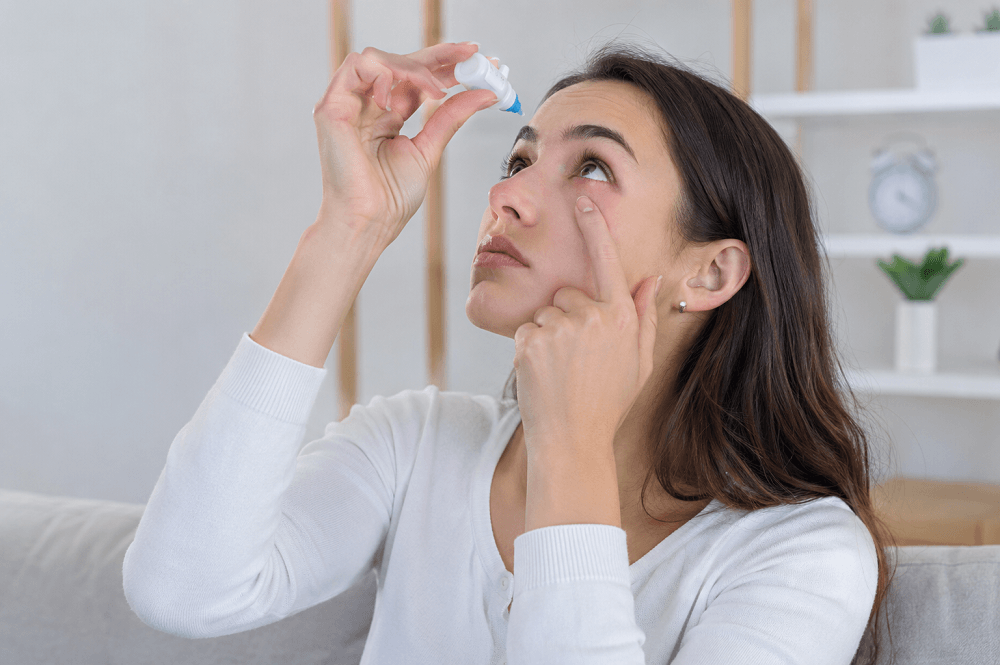
When dry eye symptoms escalate, lubricating eye drops are commonly used to help relieve symptoms associated with dry eye. Dry eye symptoms often require ongoing management, and your optometrist can recommend an appropriate management plan, which may include lubricating eye drops where appropriate. Lubricating eye drops may help supplement the tear film and reduce irritation caused by dryness. Some lubricating eye drops contain hyaluronic acid, an ingredient used to support tear-film comfort and ocular surface hydration.
How preservative-free eye drops support sensitive eyes
Preservative-free eye drops may be recommended for people who require frequent use or who are sensitive to preservatives. Your optometrist can advise whether they are suitable for your individual circumstances.
Daily adjustments to reduce eye dryness and irritation
Incorporating these daily changes in your life may help reduce symptoms associated with dry eye
- Follow the 20-20-20 rule, blink regularly, and consider using wraparound sunglasses outdoors in windy conditions.
- Stay hydrated.
- Take regular breaks from the screen.
- Position yourself away from direct air conditioners, heaters, or fans.
- Use a humidifier in dry indoor environments.
When to See an Optometrist About Watery Eyes?
If tearing is persistent, it is recommended to schedule an appointment promptly with an optometrist if you notice these symptoms.
Symptoms that warrant a professional assessment
- A constant feeling that a foreign object is stuck inside your eyelid.
- watery eyes accompanied by swelling or headaches
- Eyelids turning outward or inward
- Crusting, blood in tears or thick discharge
- Unusual sensitivity to light and pain around or in the eyes, sudden loss of vision, and flashes and floaters
- Burning and stinging sensations
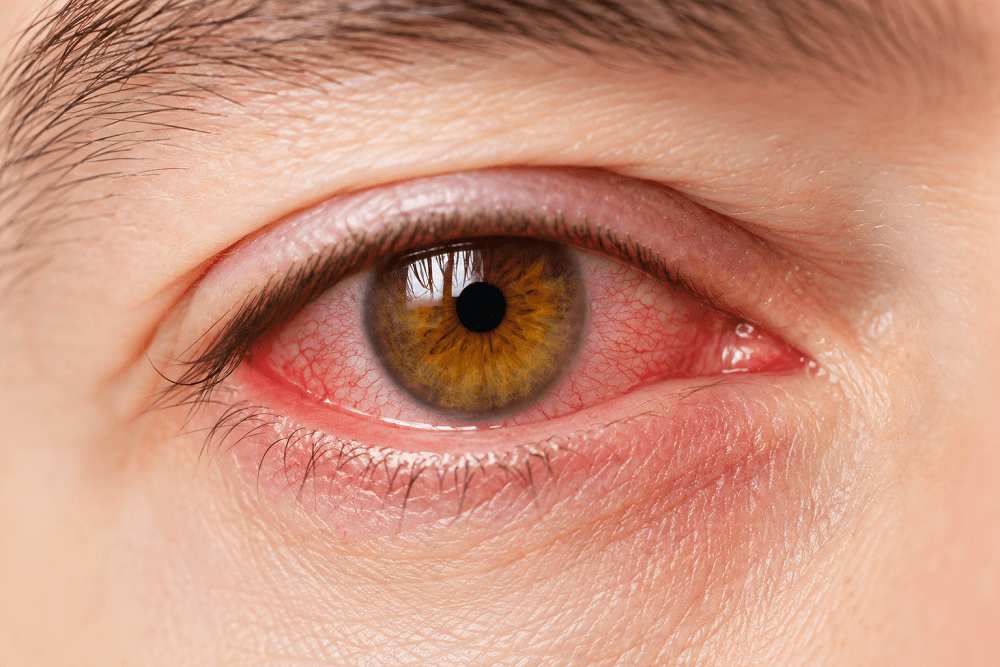
- Scratchy, red, sore, or itchy eyes
What can an eye examination reveal?
An eye examination by an optometrist can reveal if there are any eyelid issues or blockages. They assess the stability and quality of your tear film and check if there are any signs of allergies or infections. The eye examination can help identify tear film instability, eyelid conditions and other possible causes of watery eyes.
The Next Step
As normal as it may seem to ignore, persistent watery eyes signal that something isn’t functioning well in the eyes. Consulting an optometrist can help identify possible contributing factors and provide personalised advice on appropriate management options.
Frequently Asked Questions
Why do my eyes water when they feel dry?
Dryness in the eyes is a reflex mechanism that causes the eyes to produce an excess of watery tears as a response to protect themselves. However, these tears don’t restore the natural moisture that eyes need.
Can eye drops help with watery eyes?
Lubricating eye drops can help support the tear film and reduce the irritation that leads to reflex watering, particularly when the watering is linked to dryness.
Should I use eye drops if my eyes are already watering?
If the watering is linked to dryness, lubricating drops may help support the tear film and reduce irritation associated with dryness. It is always recommended to read the label and follow the directions for use. Speak with an optometrist to determine whether 2mg preservative free eye drops are appropriate for your symptoms.
Do watery eyes always mean a blocked tear duct?
No. A blocked duct or tear is one of the possible causes, but watery eyes can be linked to allergies, environmental irritants, or dry eye. Consult an optometrist to identify the actual cause through examination.
Sources:
- https://www.betterhealth.vic.gov.au/health/ConditionsAndTreatments/dry-eye
- https://www.specsavers.com.au/eye-health/eye-conditions/watery-eyes
- https://www.healthline.com/health/watery-eyes
- https://www.webmd.com/eye-health/watery-eyes-causes