Table of Contents
- What Is an Eye Allergy?
- 6 Signs of an Eye Allergy
- Is It an Allergy, Dry Eye, or an Infection?
- Common Triggers of Eye Allergies
- What to Do About Eye Allergies
- When to See an Optometrist or Doctor
- Conclusion
- FAQs
Allergies can also affect your eyes and make them red, itchy, and watery, making your everyday activities uncomfortable. Recognising the signs can help you manage symptoms, find appropriate allergy eye drops in Australia, and understand when professional advice is necessary.
What Is an Eye Allergy?
An eye allergy, also called allergic conjunctivitis, is caused when the immune system reacts to an allergen. The reaction releases histamine, which causes inflammation and irritation. Unlike infectious conjunctivitis, it is not contagious. Eye allergy symptoms can be seasonal, triggered by pollen, or can also occur year-round due to dust mites, mould, or pet dander.
6 Signs of an Eye Allergy
1. Itchy Eyes
Constant itching is a common sign of an eye allergy. You feel an urge to rub your eyes after being outdoors or around pets. But rubbing them can worsen the irritation, so use a clean, cool compress for relief instead.
2. Red or Bloodshot Eyes
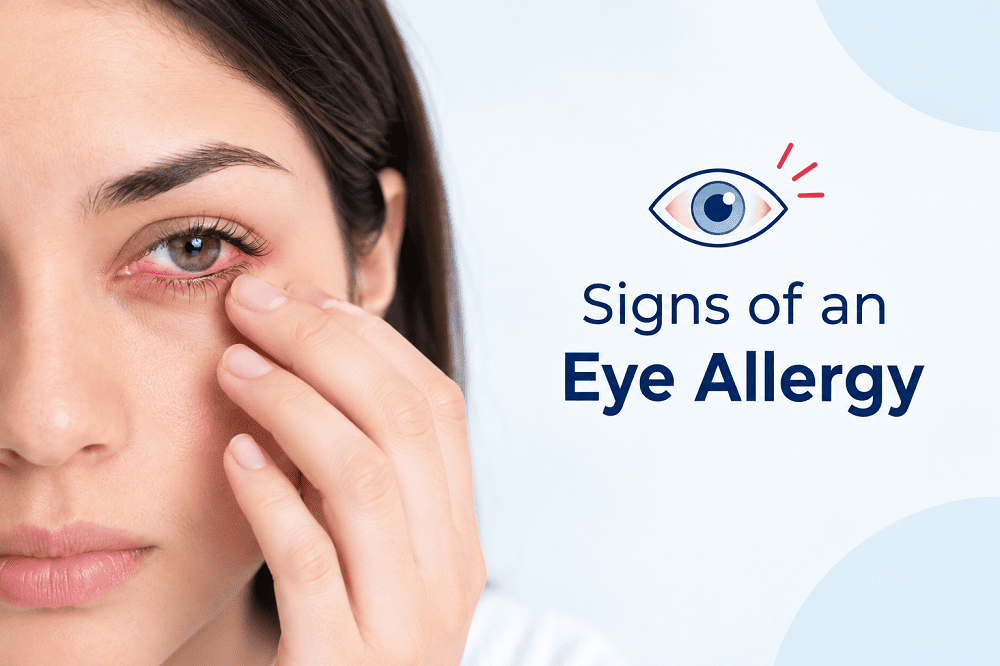
An allergic reaction can widen the small blood vessels on the eye’s surface, making the whites look pink or red. Dry eye and infections can also cause redness, so consider other symptoms before assuming that it’s an allergy.
3. Watery Eyes
Your eyes can produce extra tears after exposure to allergens like pollen or pet dander, making your eyes watery. But this is also a common symptom of dry eye, so don’t conclude that it’s an allergy based on watery eyes alone.
4. Puffy or Swollen Eyelids
Allergies can make the eyelids look puffy or feel heavy. A cool compress may ease mild swelling. But if the swelling is significant or continues to worsen, get professional advice.
5. Burning or Gritty Feeling
An allergy can cause burning, stinging, or a sensation like dust is in your eyes. If you are feeling this, lubricating eye drops can help soothe the eye’s surface and provide you with temporary relief.
6. Sensitivity to Light
Bright sunlight or indoor lighting feels uncomfortable when your eyes are irritated. You might find yourself squinting, closing your eyes more often or feeling uncomfortable when moving between different lighting conditions. This sensitivity can make reading, working on screens or spending time outdoors difficult.
Is It an Allergy, Dry Eye, or an Infection?
Eye allergies often leave both eyes itchy, red and watery. With dry eyes, you may notice a gritty feeling or burning that gets worse after working on a screen or sitting in an air-conditioned room.
An infection may cause redness along with sticky discharge that can appear yellow or green. Understand that these patterns are only useful clues and not a reliable diagnosis.
Common Triggers of Eye Allergies
Several allergens and irritants can affect your eyes. Pollen from trees and grasses can trigger seasonal symptoms, while dust, mites, pet dander, and mould can contribute to year-round reactions. Fragrances and cosmetics can also irritate sensitive eyes. But not everyone reacts to the same triggers, so noticing when symptoms appear will help you identify a pattern.
What to Do About Eye Allergies
1. Avoid triggers and resist rubbing:
Don’t expose your eyes to known allergens where possible. Also avoid rubbing your eyes, even when the itching becomes hard to ignore.
2. Use a cool compress:
Place a clean, cool, and damp cloth on your eyelids for a few minutes to soothe itching and reduce swelling.
3. Rinse with clean water:
If an irritant enters your eye, then gently rinse it with clean water.
4. Soothe with preservative-free lubricating eye drops:
Lubricating drops can moisturise the eye’s surface and help wash away allergens. Look for preservative-free eye drops in Australia, especially if they need frequent lubrication.
5. Ask your pharmacist about allergy eye drops:
If itching continues, ask a pharmacist for allergy eye drop options; before using, check the active ingredients, directions and any restrictions.
6. Switch from contact lenses to glasses on bad days:
Contact lenses become uncomfortable when your eyes feel irritated. Consider wearing glasses until symptoms settle.
When to See an Optometrist or Doctor
Seek professional advice if symptoms persist, keep returning or interfere with daily activities. Eye pain, vision changes and painful sensitivity to light require urgent assessment. Thick discharge or significant swelling should also be checked, particularly if symptoms are worsening.
Conclusion
Recognising eye allergy symptoms can help you manage mild irritation and choose appropriate steps. Simple measures can provide relief, but persistent or unusual symptoms need professional attention. If you are unsure which eye drops suit your needs, speak with a pharmacist or an optometrist.
FAQs
1. What are the first signs of an allergy?
Itching is a common early symptom, which is followed by redness, watery eyes or swollen eyelids. Sneezing or an itchy nose can occur alongside eye symptoms.
2. How can I tell an eye allergy from an eye infection?
Allergens commonly cause itching and watery eyes, while infection may cause redness and sticky discharge.
3. Are eye allergies contagious?
No. Allergic conjunctivitis results from an immune response to an allergen and does not spread between people.
4. Can lubricating eye drops help with eye allergies?
Yes. Lubricating drops can soothe irritation and help wash allergens from the eye’s surface.
5. When Should I See an Optometrist About Itchy Eyes?
Visit an optometrist if itching persists, returns repeatedly or doesn’t improve with simple measures.
Sources
- https://www.bainbridgeoptical.com/blog/5-signs-of-an-eye-allergy-and-what-to-do-about-them
- https://my.clevelandclinic.org/health/diseases/allergic-conjunctivitis
- https://www.allergy.org.au/patients/allergic-rhinitis-hay-fever-and-sinusitis/allergic-conjunctivitis