Eyes have their own way of asking for help. Many people have experienced this constant feeling of an eyelash stuck in their eye, only to find nothing there. The feeling of having sand or grit in the eyes leads to irritation even upon blinking. Dryness, itching, and grittiness often share similar symptoms, while their causes vary. As per the Optometry Australia Vision Index, an estimated 85% of Australians have experienced dry eye symptoms at some point. While the symptoms of dry, gritty, itchy eyes often overlap, it can be difficult to understand what is dry eye disease?
Here’s a guide to understanding the most common symptoms and when it’s worth seeking professional assessment.
What Do Dry Eye Symptoms Feel Like?
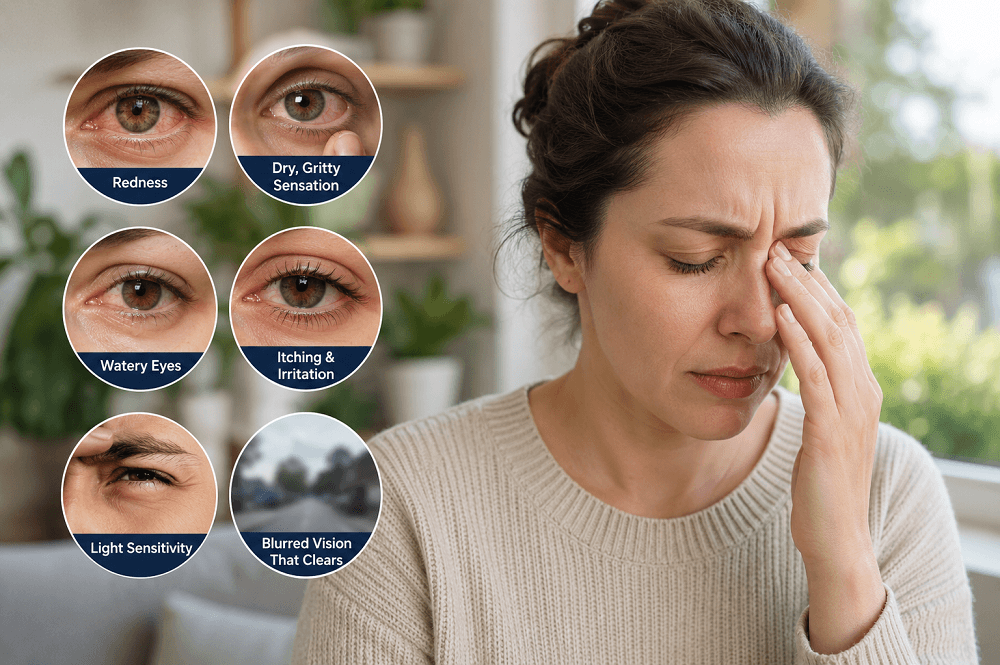
Dry eye symptoms most commonly feel like having a scratchy, gritty sensation, as if an eyelash or sand is stuck in your eye. Dry eye symptoms may also include light sensitivity, blurred vision, burning and stinging, and heavy eyelids. Surprisingly, the dry eye symptoms don’t always match the extent of dryness; it can vary from mild to occasional to persistent discomfort.
The Most Common Dry Eye Symptoms
It’s crucial to know the most common dry eye symptoms to learn how to manage dry eyes.
A dry, gritty, or sandy feeling
A constant sensation that sand or grit or an eyelid is in your eyes, which isn’t actually there.
Itching and irritation
A persistent scratchy feeling and itching in the eyes.
Burning or stinging
A burning or stinging sensation caused by irritation of the eye surface. It is caused by a lack of moisture on the delicate surface of the eyes.
Redness and light sensitivity
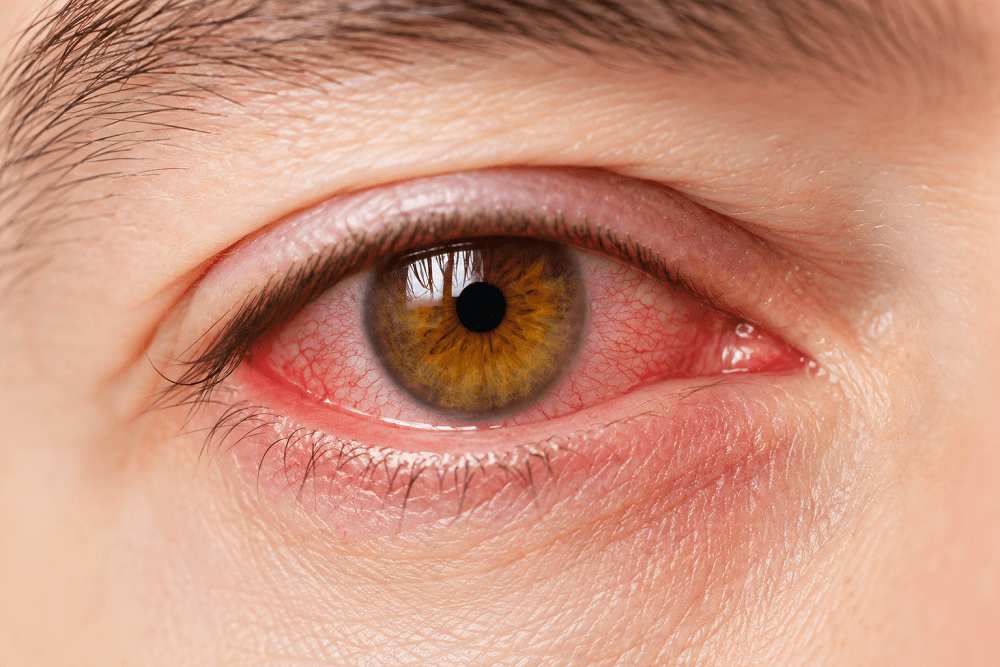
Irritated, dry ocular surfaces are more prone to redness and can make eyes more sensitive to bright light or glare.
Blurred vision that clears when you blink
Fluctuating or blurry vision is a sign of film instability, and vision often improves temporarily after blinking.
Watery eyes
It seems to be counterintuitive, but when your eyes are severely dry, they send a distress signal, causing the lacrimal glands to overflow the eyes with reflex tears to compensate.
Stringy mucus and eye fatigue.
Some people notice stringy discharge, especially first thing in the morning, along with eyes that simply feel tired or heavy by the end of the day.
Why the Same Condition Causes Such Different Symptoms
Not everyone with dry eyes experiences it in the same way. Symptoms can vary depending on the person and on which type of dry eye is behind them. Some people mainly deal with tear evaporation issues, others with low tear production, and many with a combination. Getting familiar with the three main types of dry eye can help you understand where your own symptoms might be coming from.
Which Symptoms Should You Act On?
The symptoms for dry, gritty, itchy eyes tend to be similar; understanding these dry eye symptoms helps to determine what action to take next. Not every symptom needs an immediate response, but some should never be ignored. Here’s how to tell the difference.
| Category | What It Looks Like | What To Do |
| Common and usually manageable | Tired eye after screen time, occasional grittiness, mild burning, and mild watering | Take regular blinking breaks and a warm compress. Some people find 2mg eye drops for dry eyes helpful for relieving dry eye symptoms. Your optometrist or pharmacist can advise whether they’re appropriate for you. |
| Worth booking an appointment for | Symptoms lasting more than a couple of weeks, recurring blurred vision, and ongoing discomfort in contact lenses | Visit an optometrist for a proper assessment |
| Red flags needing urgent care | Sudden vision changes, significant eye pain, a red eye while wearing contact lenses, or any eye injury | Seek urgent or same-day care |
When Should You See an Optometrist?
Simple lifestyle adjustments may help reduce symptoms in some people. But understanding what causes dry eyes doesn’t replace proper eye checks when symptoms don’t settle. So you must seek prompt care from an optometrist if you notice any of the following symptoms:
If symptoms persist after home care
If irritation, dryness, or grittiness continues despite appropriate self-care measures or dry eye drops recommended by your optometrist.
Prompt care for pain, severe redness, or a red eye with contact lenses
Severe redness or red eyes with contact lenses is a sign of something that needs attention sooner. Early assessment can help prevent complications.
Urgent care for vision changes, light pain or eye injury
These symptoms extend beyond what’s normally expected with dry eye symptoms and warrant professional assessment.
What to expect at an eye examination
When you visit an optometrist, they review your medical history, perform a visual acuity test, a refraction test to determine your eyeglass prescription, an eye muscle test, and an eye health check. An optometrist can assess the health of your eyelids and glands, check your tear film, assess for signs of other eye conditions, if any, and identify what’s actually driving your symptoms.
Conclusion
Dry, gritty and itchy eyes are common symptoms that may have a range of underlying causes, including dry eye disease. While simple lifestyle changes may help relieve mild symptoms, persistent discomfort, blurred vision or significant redness should be assessed by an optometrist. Early assessment can help identify the cause and guide the most appropriate management for your eyes.
Sources:
- https://www.betterhealth.vic.gov.au/health/conditionsandtreatments/eyes-common-problems
- https://visionaustralia.org/services/eye-conditions
- https://www.health.tas.gov.au/health-topics/eyes-and-vision-ophthalmology/common-eye-disorders
- https://www.healthdirect.gov.au/dry-eye-disease
- https://www.mayoclinic.org/diseases-conditions/dry-eyes/symptoms-causes/syc-20371863
- https://www.optometry.org.au/wp-content/uploads/GVFL/Vision_Index/2022-Vision-Index-Report.pdf