Table of Contents
- How to Use This Dry Eye Checklist
- The Dry Eye Symptoms Checklist
- Understanding What Your Symptoms Mean
- Severity Self-Assessment: Mild, Moderate, or Severe
- When Should You See an Optometrist for Dry Eyes?
- What Happens During a Dry Eye Assessment
- Symptoms That Need Prompt Care
- Tracking Your Symptoms Before Your Appointment
- Frequently Asked Questions
- Conclusion
Dry, gritty, tired eyes at the end of a long day are common, and for many people they come and go without much concern. But when that discomfort turns into a daily pattern, it may be a sign of dry eye disease. This condition affects a large number of people worldwide, particularly those who spend long hours on screens, wear contact lenses, or live in dry or air-conditioned environments. The tricky part is knowing when tired eyes are normal and when they need a proper check-up.

In Australia, an estimated 85% of people have experienced dry or irritated eyes at some point, yet only 26% have seen an optometrist about their symptoms. Part of the reason for this gap is that many people dismiss their symptoms as normal tiredness or seasonal irritation. A structured checklist can help you distinguish between occasional discomfort and symptoms that genuinely warrant professional attention.
This checklist is prepared to help you notice the signs and decide when it is time to book an appointment with an optometrist. It is general information only and is not a substitute for a professional eye examination.
How to Use This Dry Eye Checklist
Read through each section below and note which symptoms feel familiar. You do not need to tick every box for dry eyes to be relevant. If you recognise a few signs across different categories, or one symptom is persistent and affecting your daily life, that is generally a good reason to speak with an optometrist. Only a qualified eye care professional can properly assess your eyes and recommend the right next step.
As you go through the checklist, pay attention to patterns. Do your symptoms worsen at particular times of day? Are they linked to specific activities like screen use or driving? Do they improve in certain environments but flare in others? These patterns are valuable information that can help your optometrist identify the type and severity of dry eye you may be dealing with.
The Dry Eye Symptoms Checklist
Everyday discomfort signs
- Stinging, burning, or scratchy feeling in one or both eyes
- A sensation that something is in your eye, even when nothing is there
- Redness that comes and goes, especially later in the day
- Eyes that feel dry shortly after waking up
Each of these symptoms reflects a different aspect of tear film instability. Stinging and burning typically indicate corneal surface irritation from inadequate tear coverage. The foreign body sensation (feeling like something is in your eye) is caused by microscopic irregularities on the corneal surface where tears have thinned or broken down. Redness results from inflammation of the conjunctiva in response to chronic dryness. Morning dryness often suggests that your eyes are not adequately protected during sleep, which can occur when eyelids do not close fully or when tear production slows overnight.
Vision-related signs
- Blurry vision that improves when you blink
- Vision that fluctuates throughout the day
- Increased sensitivity to bright light or glare
- Difficulty focusing during reading or screen use
Vision-related symptoms are often the ones that cause people the most concern, and rightly so. Blurry vision that clears after blinking is a hallmark of tear film instability. Your tear film is your eye’s first optical surface, and when it becomes uneven, light scatters rather than focusing cleanly on the retina. This type of blur is different from the blur caused by needing glasses. It fluctuates, worsens with sustained visual tasks, and temporarily resolves with blinking or lubricating drops. If you are experiencing persistent or worsening blurriness, it is important to have this assessed to rule out other potential causes.
Eye fatigue and daily-function signs
- Eyes that feel tired or heavy well before the day is over
- Trouble wearing contact lenses for as long as you used to
- Watery eyes that seem to overcorrect for dryness
- A need to blink more often or rub your eyes
Eye fatigue is one of the most underrecognised dry eye symptoms. Many people attribute tired, heavy eyes to lack of sleep or general fatigue when the tear film is actually the issue. Contact lens intolerance is particularly telling: if you could previously wear lenses all day comfortably but now find them uncomfortable by midday, this often points to worsening tear film stability. Watery eyes (reflex tearing) occur when the eye surface becomes so dry or irritated that the lacrimal glands produce a flood of emergency tears. These reflex tears are watery and lack the lipid and mucin components needed for lasting comfort, which is why the watering provides little relief.
Situational signs
- Symptoms that worsen in air-conditioned rooms, on flights, or in wind
- Discomfort that increases with prolonged screen time
- Eyes that feel worse by the end of the workday
- Symptoms that ease with lubricating drops but return within hours
Situational patterns are among the most useful clues for identifying your dry eye triggers. If your symptoms reliably worsen in air conditioning, the low humidity is likely a significant contributor. If screen time is the main trigger, reduced blink rate is likely driving your symptoms. If drops help but relief is short-lived, it may indicate that the drops are not well matched to your type of dry eye, or that an underlying issue like meibomian gland dysfunction requires additional treatment beyond drops alone.
Understanding What Your Symptoms Mean
Not all dry eye symptoms carry the same weight. Some indicate mild, easily manageable dryness, while others suggest a more significant underlying condition that benefits from professional assessment.
Symptoms that are occasional and linked to a clear trigger (long screen session, windy day, air travel) are generally considered mild and often respond well to environmental adjustments and lubricating drops. These tend to resolve quickly once the trigger is removed.
Symptoms that are frequent (occurring most days), persistent (lasting throughout the day), or progressive (gradually worsening over weeks or months) are more likely to indicate dry eye disease that warrants optometrist assessment. This is particularly true if multiple symptom categories from the checklist above apply to you.
Symptoms that are sudden, severe, or accompanied by significant pain, vision loss, or unusual discharge are not typical of dry eye and should be assessed urgently. These may indicate an infection, injury, or other condition that requires prompt attention.
Severity Self-Assessment: Mild, Moderate, or Severe
While only an optometrist can formally diagnose and grade dry eye severity, this general guide can help you gauge where your symptoms might sit and what level of care is appropriate.
Mild
You experience occasional dryness, grittiness, or tired eyes, typically linked to clear triggers such as screen time, air conditioning, or wind. Symptoms resolve with rest, breaks, or lubricating drops. Impact on daily activities is minimal.
Suggested approach: Environmental adjustments (screen breaks, humidifier), preservative-free lubricating drops as needed.
Moderate
Symptoms are frequent (most days), affect your ability to work comfortably on screens, read, or wear contact lenses, and are only partially relieved by drops. You may experience intermittent blurred vision and noticeable eye fatigue.
Suggested approach: Book an optometrist assessment. Consistent use of preservative-free lubricating drops, warm compress therapy, and eyelid hygiene. Your optometrist may recommend a specific drop formulation based on your type of dry eye.
Severe
Symptoms are constant, significantly affecting your quality of life and ability to perform daily tasks. Drops provide minimal or short-lived relief. You may experience persistent blurred vision, constant redness, or inability to wear contact lenses at all.
Suggested approach: Professional assessment is essential. In-clinic treatments, prescription anti-inflammatory drops, or advanced management options may be required in addition to ongoing home care.
When Should You See an Optometrist for Dry Eyes?
Occasional dryness, particularly after a big day on screens or a long flight, is not usually a cause for concern. However, it is worth booking an appointment if your symptoms are persistent, getting worse over time, or if over-the-counter lubricating drops are no longer giving relief.
It is also worth getting checked if dry eye symptoms are interfering with things you need to do, such as driving, reading, working on a screen, or wearing contact lenses comfortably. An optometrist can look at the surface of your eyes, assess your tear film, and help identify whether dry eye disease, an underlying condition, or another factor is contributing to what you are experiencing.
You do not need a referral to see an optometrist in Australia. You can book directly, and a standard comprehensive eye examination is generally eligible for a Medicare rebate. When booking, it is worth mentioning that you have dry eye concerns so the practice can allocate adequate time for assessment.
What Happens During a Dry Eye Assessment
Knowing what to expect can make the appointment less daunting and help you prepare.
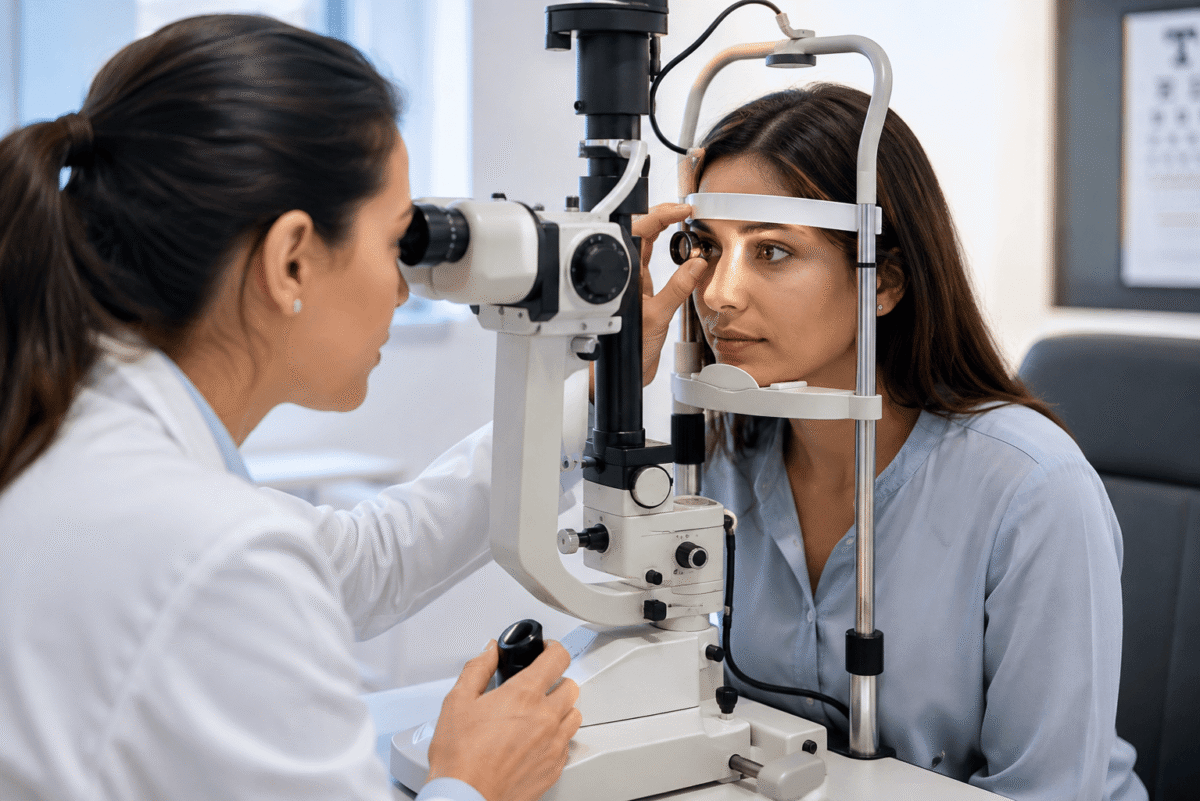
Your optometrist will typically begin with a detailed history of your symptoms, including when they started, what makes them better or worse, and any medications you are taking. They will then perform a series of tests that may include:
Tear film break-up time: A small amount of fluorescein dye is placed on your eye, and the optometrist observes how quickly your tear film begins to break up after a blink. A break-up time under 10 seconds is considered abnormal.
Surface staining: Fluorescein and other dyes highlight areas of the cornea and conjunctiva where surface damage has occurred due to dryness.
Meibomian gland assessment: The optometrist examines your eyelid margins for signs of blocked or inflamed glands. Some practices use meibography (infrared imaging) to visualise the glands directly.
Tear volume assessment: Schirmer’s test uses a small paper strip placed inside the lower eyelid to measure tear production over five minutes.
Based on these findings, your optometrist will identify whether your dry eye is aqueous deficient, evaporative, or mixed, and recommend a management plan tailored to your specific presentation.
Symptoms That Need Prompt Care
Some symptoms go beyond typical dryness and should be assessed sooner rather than later. These include sudden or severe eye pain, a noticeable change in vision, significant light sensitivity that appears suddenly, unusual eye discharge, or redness that comes with swelling. Using 2mg eye drops for dry eyes can help manage everyday dryness and irritation. If you experience any of these, contact an optometrist or seek medical attention promptly rather than waiting to see if symptoms settle on their own.
Tracking Your Symptoms Before Your Appointment
If you plan to book a dry eye assessment, keeping a brief symptom diary for one to two weeks beforehand can provide your optometrist with valuable information. You do not need anything elaborate, just a few notes each day covering:
When symptoms are worst (morning, afternoon, evening, or constant throughout the day)
What activities trigger or worsen symptoms (screen work, reading, driving, outdoor activities)
The environment when symptoms flare (air-conditioned office, heated room, windy outdoors, low humidity)
What provides relief (drops, breaks, closing eyes, changing environment) and how long that relief lasts
Any medications you are currently taking, including over-the-counter supplements
This kind of information helps your optometrist identify patterns and tailor their assessment to your specific situation. It also ensures you do not forget important details during the appointment.
Frequently Asked Questions
How do I know if my dry eye is serious?
Dry eye tends to become a more significant concern when symptoms are frequent, persistent, or resistant to basic measures like lubricating drops and rest breaks. If discomfort is affecting your ability to work, read, or wear contact lenses, or is paired with any of the urgent signs above, it is a good idea to have your eyes properly assessed rather than guessing at the cause.
When Dry Eye Symptoms Mean It’s Time to Book an Optometrist?
Book an appointment if symptoms have lasted more than a week or two, keep coming back, or are not improving with simple lifestyle changes such as taking screen breaks or using preservative free lubricating drops. An optometrist can determine the underlying cause and suggest a management plan suited to your situation.
Can I check my dry eye symptoms at home?
Several conditions can mimic dry eye, and an accurate diagnosis relies on tools only available in a clinical setting. A checklist is a helpful starting point, not a replacement for a professional assessment.
Is there a formal questionnaire optometrists use for dry eye?
Yes. Optometrists often use validated questionnaires such as the OSDI (Ocular Surface Disease Index) or the DEQ-5 (Dry Eye Questionnaire) to assess symptom severity and track improvement over time. These are typically completed as part of a comprehensive dry eye assessment.
Can children get dry eyes?
While less common than in adults, children and teenagers can develop dry eye, particularly with heavy screen use. If your child complains of tired, sore, or itchy eyes regularly, an eye examination is worthwhile. Screen time management and blink awareness are usually the first steps.
Should I stop wearing contact lenses if I have dry eye symptoms?
Not necessarily. Many people with dry eye continue wearing contact lenses comfortably with the right lens type and management plan. Using preservative-free, contact-lens-compatible lubricating drops (such as OptiChoice) and ensuring your lens prescription is up to date can make a significant difference. Your optometrist can advise on the best lens material and wearing schedule for your eyes.
Conclusion
Dry eyes are common, but persistent or worsening symptoms deserve proper attention rather than guesswork. Using this checklist can help you get a clearer picture of what you are experiencing and whether it is time to seek professional advice. If any of the signs above sound familiar, particularly if they are affecting your daily comfort or vision, booking an appointment with an optometrist is the safest next step toward understanding what is going on.
For everyday relief while managing dry eye symptoms, OptiChoice Lubricating Eye Drops are preservative-free, phosphate-free, and contact lens compatible. The 2 mg/mL is available at TerryWhite Chemmart, Blooms The Chemist, and stocking optometrists for mild to moderate dry eye. For more persistent symptoms, the 4 mg/mL, the only sodium hyaluronate formulation at this concentration in Australia and New Zealand, is available exclusively through stocking optometrists.
Sources:
- https://www.pacificeyedoctors.ca/eye-exams-services/dry-eye-symptoms-checklist/
- https://www.mayoclinic.org/diseases-conditions/dry-eyes/symptoms-causes/syc-20371863
- https://www.betterhealth.vic.gov.au/health/conditionsandtreatments/dry-eye