
Table of Contents
- What Causes Dry Eye? The Two Root Mechanisms
- How Your Tear Film Works
- Common Triggers Behind Dry Eye
- Screen Time and Digital Eye Strain: A Closer Look
- Medications That Can Cause Dry Eye
- Who Is More Likely to Get Dry Eye?
- The Australian Context: Climate, Lifestyle and Dry Eye
- How Identifying Your Trigger Helps Manage Symptoms
- When to See an Optometrist About Dry Eye Causes
- Frequently Asked Questions
- Conclusion
Dry eye happens for different reasons in different people, ranging from screen habits and climate to eyelid gland issues and underlying health conditions. Understanding the factors contributing to your dry eye symptoms can help guide appropriate management and support discussions with your optometrist. Below is a breakdown of the two root mechanisms behind dry eye, the everyday triggers that set it off, who’s most at risk, and when it’s worth getting checked.
Dry eye disease affects an estimated 700 million people globally and is becoming increasingly common in Australia. The Optometry Australia Vision Index 2022 found that 85% of Australians experienced dry, irritated, or watery eyes, up 8% from 2020. What makes dry eye particularly challenging is that it rarely has a single cause. Most people are dealing with a combination of triggers, which is why identifying your specific contributors is so important for effective management.
What Causes Dry Eye? The Two Root Mechanisms
At its core, dry eye happens when your tear film (the thin layer of moisture covering your eyes) stops doing its job properly. There are two broad ways this can go wrong.
Not enough tears (aqueous-deficient dry eye) This is when your eyes don’t produce enough of the watery layer of tears needed to keep the surface lubricated. It’s often linked to ageing, certain autoimmune conditions, and medications that reduce tear production as a side effect.
The lacrimal glands, positioned above each eye, are responsible for producing the aqueous (watery) component of your tears. When these glands produce fewer tears, whether due to age-related decline, autoimmune damage (as in Sjogren’s syndrome), or medication side effects, the eye surface becomes insufficiently lubricated. This form of dry eye tends to produce a constant, low-level dryness rather than the fluctuating symptoms typical of evaporative dry eye.
Tears that evaporate too fast (evaporative dry eye) This is actually the more common form. Your tear film has an oily outer layer, produced by tiny glands along your eyelids, that keeps tears from evaporating too quickly. When that layer is disrupted, often due to blocked or inflamed eyelid glands, tears may be present but evaporate before they can do their job.
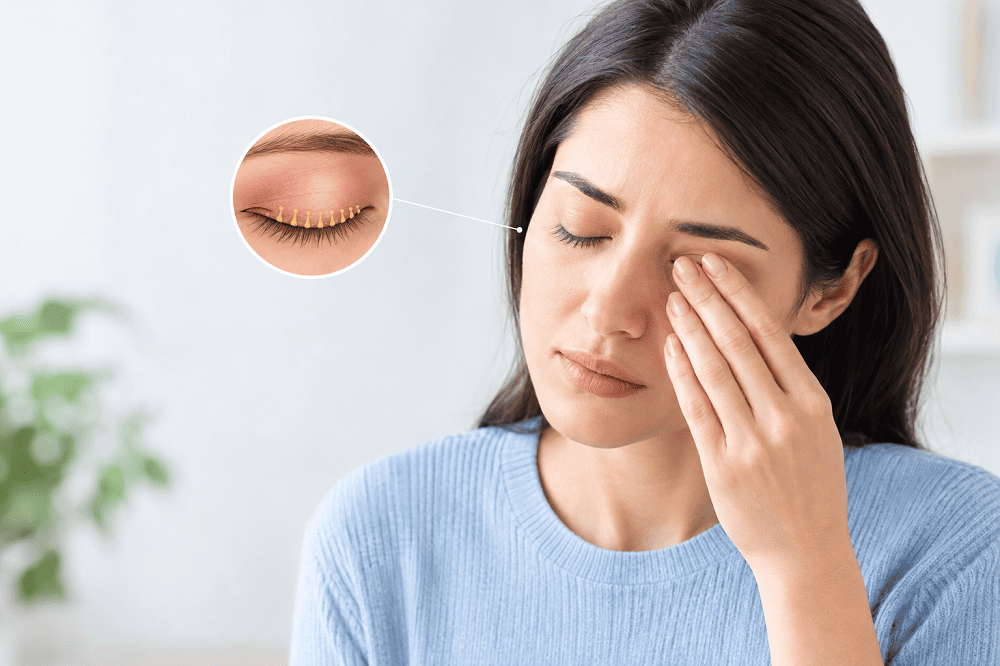
Evaporative dry eye, driven primarily by meibomian gland dysfunction (MGD), is the more common presentation in Australian optometry clinics. The meibomian glands line both the upper and lower eyelids and produce the lipid layer that acts as a protective seal over your tears. When these glands become blocked or inflamed, the oil they produce changes from a clear, olive-oil-like consistency to a thick, toothpaste-like substance that cannot flow freely. Without adequate oil on the tear surface, tears evaporate rapidly, sometimes within just a few seconds of blinking.
Many people experience a mix of both, which is why identifying the underlying cause of dry eyes matters more than reaching for a bottle of drops and hoping for the best.
How Your Tear Film Works
Understanding your tear film helps explain why dry eye produces such a wide range of symptoms. The tear film is not a simple layer of water. It is a structured coating made of three distinct layers, each with a specific role.
The lipid (oil) layer is the outermost layer, produced by the meibomian glands. It slows evaporation and keeps the tear surface smooth. When this layer is thin or absent, tears evaporate too quickly.
The aqueous (water) layer is the thickest layer, produced by the lacrimal glands. It hydrates the cornea, delivers nutrients and oxygen, and contains antibacterial proteins that protect against infection.
The mucin (mucus) layer is the innermost layer, produced by goblet cells in the conjunctiva. It helps tears adhere to the corneal surface rather than sliding off. Without mucin, even adequate tears cannot coat the eye evenly.
Every time you blink, these three layers are redistributed across the eye. Between blinks, the tear film gradually thins and becomes uneven. A healthy tear film remains stable for 15 to 45 seconds between blinks. In dry eye disease, this stability drops to under 10 seconds, or even 5 seconds in severe cases, which is why symptoms tend to worsen during activities that reduce blink rate, such as reading or screen use.
Common Triggers Behind Dry Eye
Environmental factors:
Wind, air-conditioning, heating, and low humidity all speed up tear evaporation. If symptoms flare up on flights, in air-conditioned offices, or during dry winter months, the environment is likely playing a role.
Australia’s climate creates unique environmental challenges for dry eye. Coastal regions bring wind exposure, while inland areas face dry heat and low humidity. Air conditioning, used in the vast majority of Australian workplaces and homes, actively removes moisture from the air. Flight cabins operate at humidity levels as low as 10 to 20%, which is why many people notice their eyes drying out significantly during air travel. Using lubricating drops before and during flights can help.
Extended screen time and reduced blink rate:
One of the most talked-about modern causes of dry eyes is screen time. When we focus on a screen, we blink far less often, sometimes by half, giving tears less chance to spread evenly and replenish. This is one of the clearest links between screen time and dry eyes, especially for people working long hours at a computer.
Research shows the average blink rate drops from 15 to 20 blinks per minute during normal activity to as few as 5 to 7 blinks per minute during concentrated screen use. This 50 to 66% reduction in blinking gives the tear film far less opportunity to spread evenly and leads to rapid evaporation, particularly in air-conditioned offices. In Australia, 78% of people have experienced eye strain while using computers, tablets, or smartphones, and 68% spend four or more hours daily on screens. These figures have risen significantly since the shift to remote and hybrid working arrangements.
Ageing and hormonal changes:
Tear production naturally declines with age, and hormonal shifts during pregnancy, on birth control, or through menopause can also affect tear quality, which is why dry eye is more common in older adults and in women generally.
Specifically, 57.5% of Australians over 50 experience at least one dry eye symptom, and prevalence increases further with each decade. For women, the hormonal connection is particularly significant. Oestrogen and androgen both play roles in tear production and meibomian gland function. During menopause, the decline in these hormones directly affects both tear volume and tear quality. Women on hormone replacement therapy (HRT) may also experience changes in dry eye symptoms, sometimes improving and sometimes worsening, depending on the type of HRT used.
Contact lens wear:
Lenses sit directly on the tear film and can disrupt its stability, making dryness more likely, particularly with extended wear or lenses that don’t suit your eyes.
Contact lenses divide the tear film into two thinner layers, one above and one below the lens, both of which are less stable than the intact tear film. This explains why many contact lens wearers experience increasing dryness toward the end of the wearing day. Lens material also plays a role. Silicone hydrogel lenses generally allow more oxygen through to the cornea but can attract lipid deposits. Your optometrist can help select a lens material and wearing schedule that minimises dryness. Using preservative-free lubricating drops designed for contact lens wearers, such as OptiChoice, before inserting and throughout the day can significantly improve comfort.
Eyelid conditions (blepharitis and MGD):
Blepharitis and meibomian gland dysfunction (MGD) both interfere with the oily layer of your tears. Inflamed or blocked eyelid glands are a major contributor to evaporative dry eye and a common finding in eye examinations.
Blepharitis is inflammation of the eyelid margins, often caused by bacterial overgrowth or skin conditions like rosacea. It frequently coexists with MGD and exacerbates dry eye symptoms. Signs include crusty or flaky debris at the base of the eyelashes, redness along the lid margin, and a burning or stinging sensation. Regular lid hygiene, including warm compresses and lid cleaning, is the cornerstone of managing both blepharitis and MGD. Left untreated, chronic blepharitis can lead to permanent gland damage and progressive worsening of dry eye.
Medications and medical treatments:
Antihistamines, decongestants, antidepressants, some blood pressure medications, and hormone therapies can reduce tear production as a side effect. If dry eyes started around the same time as a new medication, mention it to your optometrist.
Underlying health conditions:
Autoimmune conditions such as Sjögren’s syndrome, rheumatoid arthritis and lupus, as well as diabetes and thyroid disorders, are recognised dry eye risk factors that can affect tear glands directly or alter tear composition.
Diabetes deserves particular mention: an estimated 40% of diabetes patients also have dry eye disease. High blood sugar can damage the nerves that signal tear production and reduce corneal sensitivity, meaning diabetic patients may not feel dry eye symptoms until the condition is moderately advanced. Similarly, 40% of glaucoma patients experience dry eye, often because the preservatives in glaucoma drops contribute to ocular surface irritation over time.
Screen Time and Digital Eye Strain: A Closer Look
Given that screen time is now one of the leading contributors to dry eye in Australia, it deserves a closer look. Digital eye strain, also known as computer vision syndrome, is not a single condition but a cluster of symptoms caused by prolonged screen use. These include dry eyes, eye fatigue, headaches, blurred vision, and neck or shoulder tension.
The relationship between screens and dry eyes works through several mechanisms. First, reduced blink rate means tears are not redistributed frequently enough. Second, the upward gaze angle used with many desktop monitors exposes more of the eye surface to evaporation. Third, blue light from screens may contribute to eye fatigue, though its direct effect on tear film stability is still being studied.
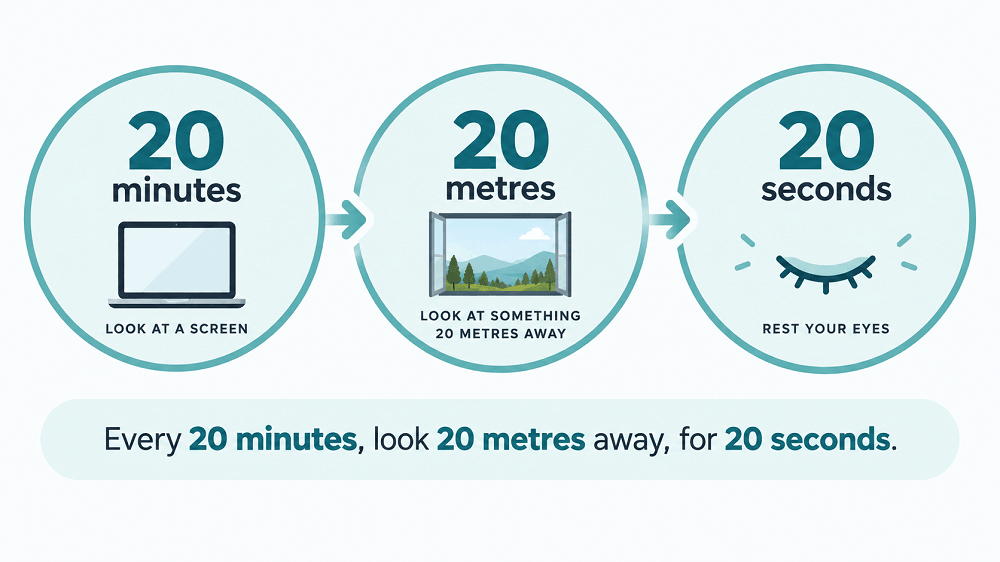
Practical steps that make a measurable difference include following the 20/20/20 rule (every 20 minutes, look at something 20 metres away for 20 seconds), positioning your screen slightly below eye level to reduce exposed eye surface, increasing text size to reduce squinting, and consciously reminding yourself to blink fully during screen use. Many people develop incomplete blinks during screen work, where the upper lid does not fully meet the lower lid, which further reduces tear film coverage.
Medications That Can Cause Dry Eye
A number of commonly prescribed medications can contribute to dry eye as a side effect. Being aware of these can help you and your optometrist identify whether a medication is playing a role in your symptoms.
Antihistamines (used for allergies) reduce secretions throughout the body, including tear production. Decongestants (nasal sprays and tablets) have a similar drying effect. Antidepressants, particularly SSRIs and tricyclics, can reduce tear secretion. Beta-blockers and diuretics (used for blood pressure) may affect tear production. Oral contraceptives and hormone replacement therapy can alter tear film composition through hormonal effects. Isotretinoin (used for acne) affects the meibomian glands and can cause significant dryness. Chemotherapy and radiation therapy in the head and neck area can damage tear glands.
If you suspect a medication is contributing to your dry eye, do not stop taking it without speaking to the prescribing doctor. Instead, mention the potential connection to your optometrist, who can help manage the symptoms alongside your existing treatment. Preservative-free lubricating drops, such as OptiChoice, can provide supportive relief while you and your healthcare team address the underlying cause.
Who Is More Likely to Get Dry Eye?
Dry eye becomes more common after age 50, and women are affected more often than men, largely due to hormonal factors. People who wear contact lenses, spend long hours on screens, live in dry or windy climates, or manage an autoimmune or thyroid condition also carry a higher risk.
In the Australian context specifically, several additional risk groups are worth noting. People working in air-conditioned offices for extended periods are at elevated risk. FIFO (fly-in fly-out) workers exposed to dry, dusty environments face unique challenges. Older Australians in retirement or aged care settings, where heating and cooling systems run continuously, often develop dry eye that goes unrecognised. People who have undergone refractive laser eye surgery (such as LASIK) may experience dry eye for months or even years post-procedure, as the surgery can temporarily disrupt corneal nerves that regulate tear production.
The Australian Context: Climate, Lifestyle and Dry Eye
Australia presents a unique combination of factors that contribute to dry eye. The country’s diverse climate, from tropical humidity in the north to dry inland conditions and coastal wind exposure, creates different triggers depending on where you live.
In cities like Sydney, Melbourne, and Brisbane, the combination of air-conditioned offices, screen-intensive work, and seasonal variations in humidity makes dry eye a year-round concern. In drier inland regions, low ambient humidity compounds the challenge. Coastal environments bring wind exposure that accelerates tear evaporation, particularly for outdoor workers and those who exercise outdoors regularly.
Lifestyle factors also play a role. Australian culture values outdoor activity, yet UV exposure and wind during sport or recreation can aggravate dry eye. Wraparound sunglasses provide a simple but effective barrier against wind and UV, creating a more humid microenvironment around the eyes.
The post-2020 shift to remote and hybrid work has introduced a new dynamic. People working from home often use screens for longer uninterrupted periods than they did in office settings, and home environments may not have the same air quality or lighting conditions as a professional workspace.
How Identifying Your Trigger Helps Manage Symptoms
Someone whose symptoms are mostly environmental may benefit from measures such as using a humidifier and taking regular screen breaks. Someone with blepharitis or MGD may need eyelid hygiene routines alongside lubricating drops.
For many people, especially those managing chronic or recurring symptoms, using 2mg preservative free eye drops formulation reduces the risk of further irritation that preservatives can sometimes cause with frequent use. Knowing your trigger shapes what actually helps.
A practical way to start identifying your triggers is to keep a simple symptom diary for one to two weeks. Note when your symptoms are worst (morning, afternoon, evening), what you were doing at the time (screen work, outdoor activity, reading), the environment (air-conditioned office, windy outdoors, heated room), and whether drops provided relief. Sharing this information with your optometrist gives them valuable context that a single examination cannot always capture.
It is also worth noting that dry eye triggers often compound each other. For example, someone with mild MGD may cope well in a humid environment but develop significant symptoms when working in an air-conditioned office for long hours on a screen. Addressing multiple triggers simultaneously tends to produce better results than tackling them individually.
Always read the label and follow the directions for use. If symptoms persist, worsen, or you are unsure which product is right for you, talk to your pharmacist, optometrist, or doctor.
When to See an Optometrist About Dry Eye Causes
Occasional dryness after a long flight or a big day on screens is normal. But if symptoms are frequent, worsening, or affecting your vision or ability to wear contact lenses, it’s time to book an eye examination. An optometrist can assess your tear film and eyelid glands to pinpoint whether you’re dealing with an aqueous-deficient, evaporative, or mixed form of dry eye, rather than guessing at solutions.
It is worth booking sooner rather than later if you notice any of the following patterns: symptoms persist despite two or more weeks of consistent self-care, your vision fluctuates or blurs and clears with blinking, you are experiencing increasing difficulty wearing contact lenses, your symptoms are accompanied by significant redness or eye pain, or you have started a new medication and noticed dryness developing. Early assessment not only provides clarity but can prevent mild symptoms from progressing to more persistent or difficult-to-treat dry eye.
Frequently Asked Questions
What is the main cause of dry eyes?
There isn’t one single cause. Dry eyes result from either reduced tear production or tears evaporating too quickly, often due to aging, environment, or eyelid gland issues.
Can dry eyes be caused by too much screen time?
Yes. Extended screen use reduces how often you blink, which disrupts your tear film and speeds up evaporation.
Why do my eyes get dry even when I’m not using a screen?
Environmental factors, eyelid conditions, medications, or underlying health issues can all cause dry eye independent of screen use.
Can dry eye triggers be reversed?
Some factors, such as environmental conditions or screen habits, may be modified. Others may require ongoing management in consultation with an eye-care professional.
Can allergies cause dry eyes?
Allergies and dry eye frequently coexist and can mimic each other. Allergic conjunctivitis causes itching and watering that overlaps with dry eye symptoms. Antihistamines taken for allergies can also reduce tear production, creating a secondary cause of dryness. If you experience both allergic and dry eye symptoms, your optometrist can help distinguish between the two and recommend appropriate management for each.
Does air travel make dry eyes worse?
Yes. Aircraft cabins operate at very low humidity levels (10 to 20%), which accelerates tear evaporation significantly. Using preservative-free lubricating drops before boarding and throughout the flight, staying hydrated, and avoiding contact lens wear during long flights can all help.
Can dry eye be caused by eye surgery?
Refractive laser surgery (LASIK, SMILE, PRK) can cause dry eye for several months post-operatively due to temporary disruption of corneal nerves. Most cases resolve within 6 to 12 months, but some patients may experience longer-lasting dryness that requires ongoing management.
Conclusion
Dry eyes rarely have just one cause. It’s usually a combination of how your tears are made, how they evaporate, and the everyday habits and health factors that tip the balance. Recognising your specific triggers makes it far easier to manage symptoms effectively. If dryness keeps coming back, an eye examination is the most reliable way to get answers and a plan that fits your eyes.
For everyday comfort while you work with your optometrist to address underlying causes, OptiChoice Lubricating Eye Drops provide preservative-free, phosphate-free relief in two concentrations. The 2 mg/mL is available at TerryWhite Chemmart, Blooms The Chemist, and stocking optometrists. The 4 mg/mL, the only sodium hyaluronate formulation at this concentration in Australia and New Zealand, is available exclusively through stocking optometrists for more persistent symptoms.
Sources:
- https://www.mayoclinic.org/diseases-conditions/dry-eyes/symptoms-causes/syc-20371863
- https://my.clevelandclinic.org/health/diseases/24479-dry-eye
- https://www.uhc.com/news-articles/healthy-living/7-common-causes-dry-eye-and-what-do-about-them