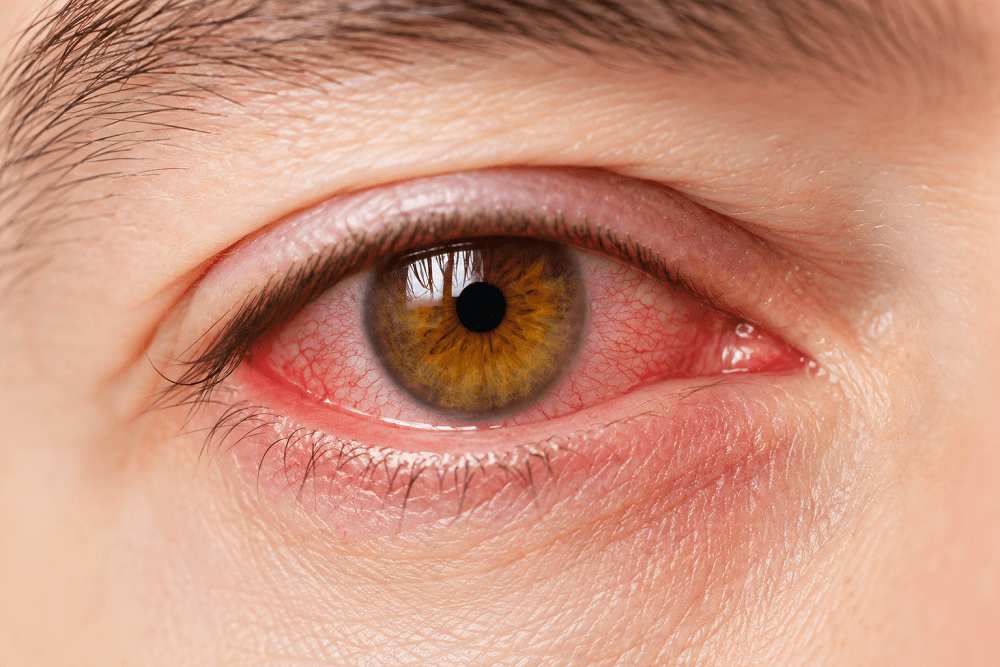
Dry eye symptoms can arise from multiple contributing factors, including environmental influences and lifestyle factors. It shows up in women far more than men, and it tends to cluster around specific life stages, the years around menopause especially. The reason comes down to hormones: oestrogen and progesterone have a direct hand in how well your eyes stay lubricated, so when those levels shift, your eyes often feel it before anything else does.
This article covers dry eye causes in women, the main dry eye risk factors, and what actually helps once you know what you’re dealing with.
Women Are More Likely to Experience Dry Eye
Dry eye disease affects women at a noticeably higher rate than men, and the gap widens with age; some studies put the difference at nearly double. It comes down to biology. The glands that keep the eye’s surface lubricated are sensitive to hormonal shifts, and women go through several major ones across their lifetime that men don’t: puberty, the menstrual cycle, pregnancy, breastfeeding, contraceptive use, and menopause.
Effects of Hormones on the Tear Film
Tear film isn’t just water. It consists of three layers, including an oily outer layer, a watery middle layer, and a mucus layer that helps it stick evenly to the eye. Hormones affect all three.
Oestrogen and progesterone act on the glands that make the watery and oily layers. When hormone levels shift, the oil glands work less well, oil quality drops, and tears evaporate faster. Androgens matter too, since they support healthy oil gland function and also decline with age. The result is a tear film that’s less stable, even if the eyes are still making “enough” tears.
Dry Eye and Menopause
Menopause dry eyes are where this becomes most noticeable for a lot of women. As oestrogen and progesterone levels fall, tear quality tends to fall with them, and this drop in oestrogen is linked to meibomian gland dysfunction, now seen as the leading cause of dry eye overall.
Perimenopause dry eyes can be just as tough to deal with, sometimes worse, because hormone levels are going up and down rather than dropping steadily. Some women notice dry eyes years before other, more well-known menopause symptoms turn up, making it one of the early signs of the change.
HRT and dry eye have a mixed relationship: it helps some women and makes symptoms worse for others, especially on oestrogen-only therapy. It’s worth talking this through with both your optometrist and your GP.
Other Hormonal Life Stages That Affect Eye Comfort
Menopause gets most of the attention, but it isn’t the only hormonal life stage that affects eye comfort.
- Pregnancy shifts hormones dramatically, and many women notice dry, gritty or contact-lens-intolerant eyes, particularly in the third trimester. This usually settles after birth, though not always immediately.
- Breastfeeding keeps oestrogen relatively low, and some women find dry eye persists through this period.
- The menstrual cycle can cause smaller, cyclical changes. Some women notice their eyes feel drier in the days before their period.
- The contraceptive pill and other hormonal contraception can affect tear film for some users, though the effect varies from person to person.
None of these need to be alarming on their own, but they’re worth mentioning to your optometrist if you’re trying to work out why your eyes feel different at different points in the month or across a pregnancy.
Non-Hormonal Factors That Compound the Problem
Hormones set the stage, but they’re rarely the whole story. These are the other common dry eye risk factors that tend to compound hormonal dry eye:
- Screen time: reduced blink rate during focused screen use lets the tear film evaporate faster.
- Air conditioning and heating: both dry out the air and speed up tear evaporation.
- Certain medications: antihistamines, some antidepressants, and some blood pressure medications can reduce tear production as a side effect.
- Autoimmune conditions: conditions like Sjögren’s syndrome, rheumatoid arthritis and thyroid disorders, which are themselves more common in women, are strongly linked to dry eye.
- Contact lens wear: long-term lens wear can affect tear film stability, and standard drops aren’t always suited to it.
Managing Dry Eye Through Hormonal Change
There’s no single fix, because there’s rarely a single cause, but a few things genuinely help:
- Warm compresses and gentle eyelid massage support meibomian gland function by helping the natural oils flow more freely.
- Preservative-free eye drops are often the first practical step. Preservatives can irritate an already sensitive eye surface with regular use, and formulations vary, so it’s worth getting guidance rather than grabbing whatever’s cheapest on the shelf.
- Regular screen breaks (the 20-20-20 rule: every 20 minutes, look at something 20 feet away for 20 seconds) reduce the strain from reduced blinking.
- Omega-3 intake has been studied for its role in tear film quality, though results across trials are mixed, so it’s not a guaranteed fix on its own.
- In-clinic treatments are available for more persistent cases, worth asking about if drops alone aren’t cutting it.
When to See an Optometrist and When to Raise It With Your GP
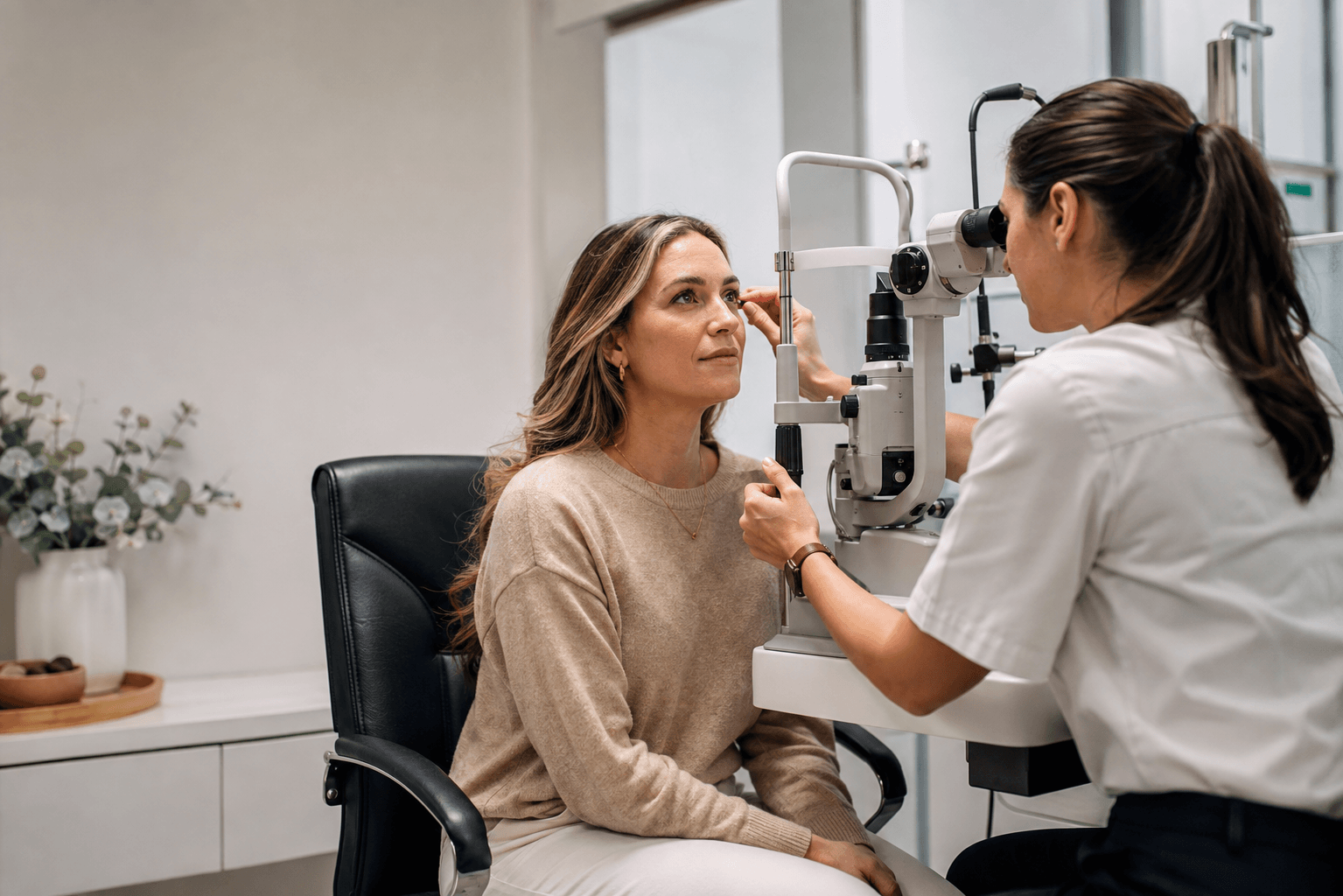
An optometrist is the right first stop. They can assess your tear film, check your meibomian glands, and rule out other causes of irritation. If your dry eye is linked to a broader hormonal pattern, irregular cycles, other perimenopausal symptoms, or symptoms that started alongside a new medication- it’s worth mentioning to your GP too, since they can consider whether HRT or a medication review is relevant.
Persistent dry eye is occasionally an early sign of an autoimmune condition, so if it comes with dry mouth, joint pain or unusual fatigue, flag that combination to your GP directly.
Frequently Asked Questions
Can menopause cause dry eyes?
Yes. The drop in oestrogen and progesterone during menopause is strongly linked to reduced tear film quality and meibomian gland dysfunction, which is why dry eye becomes so much more common around this life stage.
Are dry eyes a sign of perimenopause?
They can be. Dry eye is one of the lesser-known early signs of perimenopause and sometimes appears before more commonly recognised symptoms like hot flushes or irregular periods.
Do dry eyes from menopause go away?
Not usually on their own, but they’re very manageable. Symptoms tend to respond well to a combination of lid hygiene, appropriate lubricating drops and, for some women, hormone therapy, though this needs to be discussed with a GP.
Can eye makeup or lash extensions make dry eyes worse?
Yes, they can. Eyeliner applied close to the lash line can block the meibomian gland openings, and lash extension glue can irritate the eyelid margin. Neither is a major issue occasionally, but for someone already prone to dry eye, both can make symptoms more noticeable.
Why don’t my eye drops seem to help?
It often comes down to the type of drop rather than the drops not working at all. Watery lubricants don’t address oil-layer problems, which is the more common issue in meibomian gland dysfunction. A tailored recommendation based on what’s actually happening with your tear film makes a real difference.
Are dry eyes worse at night or in the morning?
Both, for different reasons. Mornings can be worse due to reduced tear production and incomplete eyelid closure overnight. Evenings can be worse after a day of screen use, air conditioning, and reduced blinking. Which one is worse for you is a useful clue for your optometrist.
Should I speak to my GP or my optometrist about dry eyes?
Start with your optometrist. They can properly assess the eye itself. If your symptoms seem connected to a broader hormonal pattern or come with other symptoms, your GP is worth looping in too. This isn’t an either/or; the two often work best together.
This article is general information and isn’t a substitute for a personal assessment. If you’re experiencing persistent dry eye, book in with your optometrist to find out what’s actually driving it for you.
References:
- https://www.eyecareplusmermaidbeach.com.au/post/navigating-dry-eyes-during-menopause-understanding-the-impact-and-finding-relief
- https://www.abernethyowens.com.au/whatsnewdetail/How-Hormonal-Changes-Affect-Dry-Eye-Disease-Understanding-the-Connection
- https://thepauselife.com/blogs/the-pause-blog/dry-eyes-a-common-menopause-problem
- https://www.hopkinsmedicine.org/health/wellness-and-prevention/perimenopause-menopause-and-dry-eyes