Table of Contents
- What Is Meibomian Gland Dysfunction
- Why MGD is Often the Hidden Cause of Dry Eye
- Common Symptoms of MGD
- Causes and Risk Factors
- How is MGD Diagnosed?
- How to Manage MGD and Ease Symptoms
- When to See an Optometrist
- Conclusion
- FAQs
Persistent dry eyes are frustrating, especially when rest and lubricating drops provide only temporary relief. The problem can also be the oil-producing glands along your eyelids. When these glands do not function properly, tears evaporate faster. Understanding the cause can help you decide if you need everyday eye drops for dry eyes or professional advice.
What Is Meibomian Gland Dysfunction
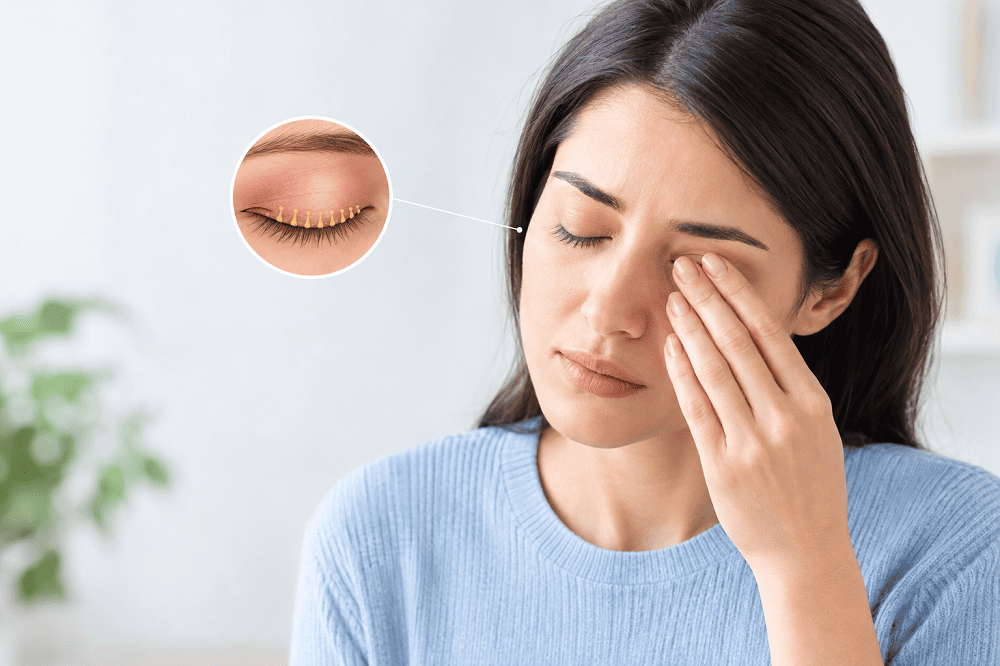
Meibomian gland dysfunction (MGD) occurs when the tiny glands along the edges of your upper and lower eyelids get blocked or produce oil that flows poorly. Your tear film has three layers: an outer oily layer that slows evaporation, a middle watery layer and an inner mucus layer. Together, they keep the eye surface moist. So when one of them is disrupted, tears become less stable, and dryness may develop.
Why MGD is Often the Hidden Cause of Dry Eye
MGD is one of the common causes of evaporative dry eye, where tears evaporate faster than normal. Unlike dry eye caused mainly by insufficient tear production, it affects the tear film’s ability to retain moisture. But both dry eye and MGD can occur together because the symptoms develop gradually, and people may mistake them for tiredness, screen fatigue or allergies.
Common Symptoms of MGD
MGD may cause burning, stinging, grittiness or a sensation that something is in the eye. Vision can become temporarily blurred but improve after blinking, as the tear film spreads across the eye surface. Crusting around the eyelids on waking and recurring styes are other possible signs. Because these symptoms can occur with other eye conditions, persistent irritation should be assessed rather than automatically attributed to dry eye.
Causes and Risk Factors
Ageing and hormonal changes may affect the amount and consistency of oil produced by the glands. Extended screen use can also contribute because people tend to blink less frequently or less completely while concentrating. Contact lens wear may aggravate dryness, while blepharitis can inflame the eyelid margins. Certain medications may also contribute to dry eye symptoms. These factors do not confirm MGD, but they can help an optometrist determine what to investigate.
How is MGD Diagnosed?
An optometrist examines the eyelids and the surface for blocked gland openings, inflammation and signs of tear film instability. They gently express the glands to assess the oil released. Tear break-up time testing measures how quickly dry spots develop after blinking, while meibography uses imaging to examine gland structure. The results, considered alongside symptoms and medical history, help guide treatment.
How to Manage MGD and Ease Symptoms
MGD management usually focuses on eyelid care and improving tear-film comfort. The most suitable approach depends on the symptoms and an optometrist’s findings.
1. Apply a Warm Compress
You can apply a clean, comfortable warm cloth over closed eyelids for several minutes. The warmth will help soften the thickened oil so it can flow more easily.
2. Practice Gentle Lid Massage and Lid Hygiene
Giving your eyelids a gentle massage after warming can help move oil towards the gland openings. You also need to maintain hygiene by cleaning the eyelid margins with a suitable lid cleanser; make sure to avoid forceful rubbing or squeezing.
3. Support Your Tear Film With Lubricating Eye Drops
Lubricating drops can ease dryness and improve comfort, but they do not unblock the glands. When choosing lubricating eye drops, consider how frequently you need them and whether preservative-free options are suitable. For 4mg lubricating eye drops, check the active ingredients, intended use and directions rather than relying on the strength alone.
4. Take screen breaks and blink fully
Looking at a screen for a long time can reduce blinking, allowing tears to evaporate more quickly. Ensure that you are taking regular breaks and blinking fully to distribute moisture across the eye surface.
5. Reduce exposure to air-conditioning, wind and smoke
Direct airflow, wind and smoke worsen irritation. You need to redirect air-conditioning vents away from your face and consider protective eyewear outdoors if wind aggravates your symptoms.
When to See an Optometrist
Consult an optometrist if dryness occurs even after self-care or symptoms are creating problems in daily activities. Significant pain, sudden vision changes, marked redness or light sensitivity require quick medical attention.
Conclusion
To manage MGD, you need to understand the causes and choose suitable care. Consistent eyelid hygiene, lubricating drops and professional advice can help relieve symptoms and support eye comfort.
FAQs
1. What is meibomian gland dysfunction in simple terms?
In MGD, the tiny glands along your eyelid edges that release an oil that slows tears evaporating get blocked, and the tears dry out quickly.
2. Is MGD the same as dry eye?
Not exactly. MGD is one of the common causes of evaporative dry eye, but it is not the same as dry eyes.
3. Can MGD be cured?
MGD is often a long-term condition that can be managed rather than permanently cured.
4. How do I use a warm compress for MGD?
Hold a clean, comfortable warm cloth over closed eyelids for several minutes. Follow your optometrist’s advice on frequency.
5. Can lubricating eye drops help with MGD?
Lubricating drops can improve tear-film comfort and relieve dryness, but they can not unblock the glands.
Sources
- https://my.clevelandclinic.org/health/diseases/meibomian-gland-dysfunction
- https://greenwicheye.com/article/meibomian-gland-dysfunction/
- https://perryeyecare.com/meibomian-gland-dysfunction-the-hidden-cause-of-most-dry-eye/