Table of Contents
- Dry Eyes Vs. Allergies At a Glance
- What Causes Dry Eye?
- What Causes Allergies?
- Can You Have Both?
- How to Find Relief from Dry Eye
- How To Find Relief From Eye Allergies
- When to See an Optometrist or Doctor
- Conclusion
- FAQs
Dry eye and eye allergies can both cause redness, irritation and watery eyes, making it difficult to work out what is behind the discomfort. But their causes and treatments differ, so choosing the right treatment is important. And before you start searching for allergy eye drops in Australia, understand the signs of each condition for better assessment.
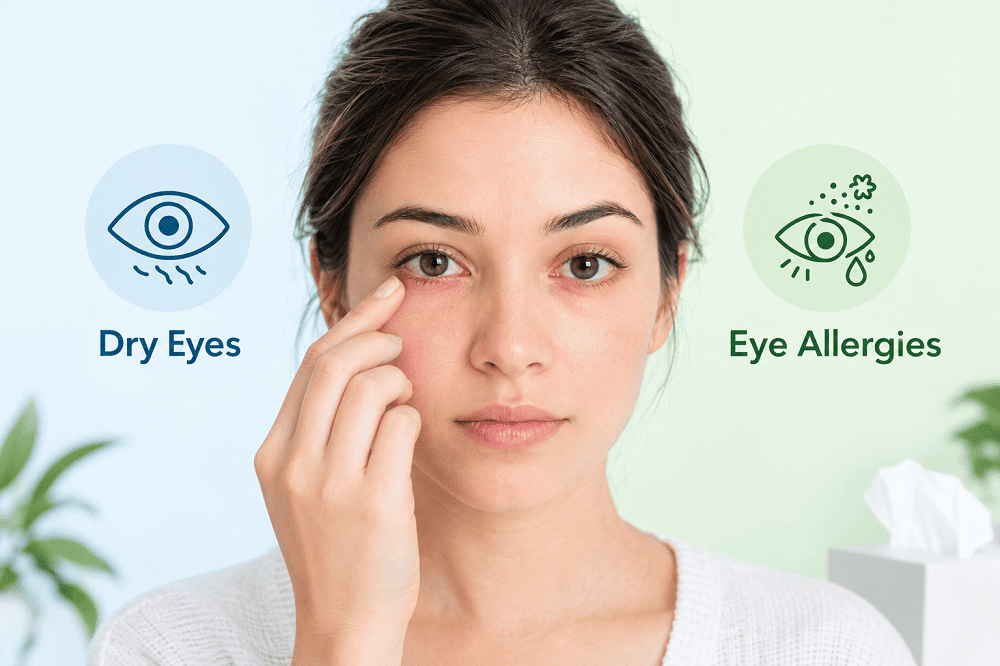
Dry Eyes Vs. Allergies At a Glance
| Symptoms | Dry Eyes | Allergies |
|---|---|---|
| Itching | Possible | Often prominent |
| Gritty feeling | Common | Less typical |
| Watery eyes | Possibles | Common |
| Swollen eyelids | Less common | Can occur |
| Blurred vision | May clear after cleaning | May occur |
| Tired eyes | Common after looking at screens | Possible |
| Sneezing or runny nose | Not usually linked | May occur |
One thing to take into account is that these are clues, not a diagnosis. Symptoms overlap, and other conditions can cause similar discomfort, so it is better to consult an optometrist.
What Causes Dry Eye?
Dry eyes occur when tears are insufficient or do not keep the eye surface lubricated. It can cause grittiness, burning, tired eyes or fluctuating vision. Screen use also contributes, as people blink less while concentrating on the screen. Air-conditioning, wind and smoke can increase tear evaporation; contact lenses, ageing and hormonal changes can also affect tear quality or production.
What Causes Allergies?
Eye allergies are caused when the immune system reacts to triggers like pollen, dust mites, pet dander or mould. Histamine release causes itching, redness, watering, and puffy eyelids. A runny nose or sneezing can also occur. Strong itching generally suggests allergies, but the symptoms alone cannot confirm the cause.
Can You Have Both?
Allergies can inflame the eye surface, while rubbing can disturb the tear film. Some allergy medicines can also contribute to dryness. If you have both itchy eyes and a gritty feeling, an ophthalmologist can help you assess if both are connected.
How to Find Relief from Dry Eye
1. Support Your Tear Film With Lubricating Eye Drops
Lubricating eye drops moisten the eye surface and can ease dryness. Your choice depends on symptoms and frequency of use.
2. Take regular screen breaks
Try the 20/20/20 rule, which means once every 20 minutes you have to look at an object about 20 feet away from you for 20 seconds. And remember to blink fully and regularly during screen use.
3. Use a Warm Compress on the Eyelids
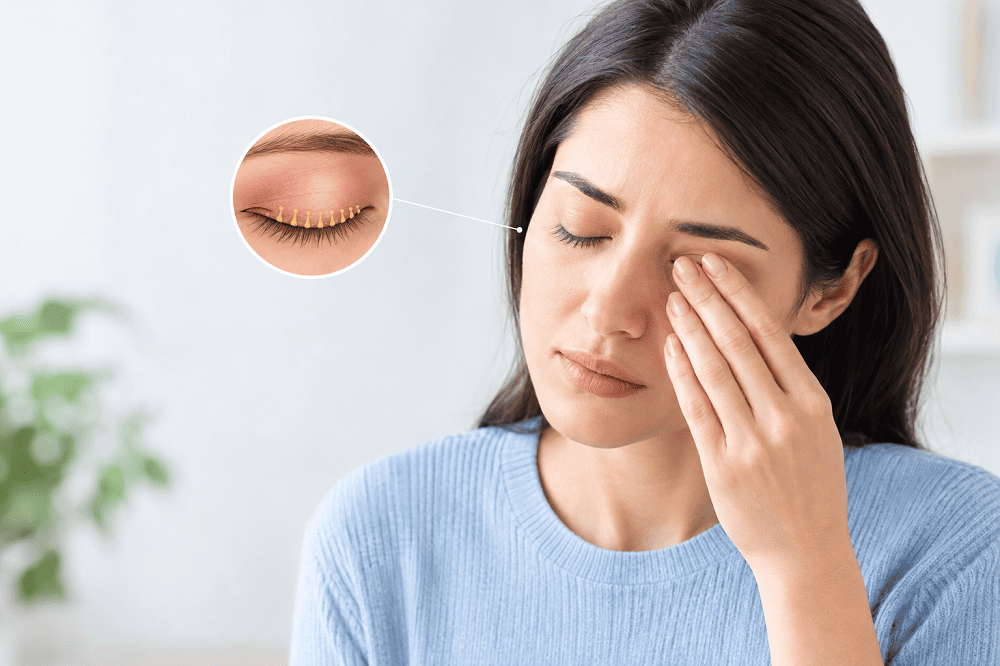
A comfortably warm, not hot, clean cloth may soften oils around the eyelid margins. Avoid pressure and stop if irritation worsens.
4. Reduce Exposure to Air-Con, Wind and Smoke
Avoid directing fans or air-conditioning at your face. Glasses may shield your eyes in windy conditions, and limiting smoke exposure may reduce irritation.
How To Find Relief From Eye Allergies
1. Limit Triggers and Avoid Rubbing
Reduce exposure to known triggers, keep windows closed on high-pollen days, and wash your hands after spending time outdoors. Do not rub your eyes, as it will worsen the irritation.
2. Use a Cool Compress
Place a clean, cool cloth over closed eyelids to soothe itching and puffiness. Do not put ice directly on the skin.
3. Ask Your Pharmacist About Allergy Eye Drops
Allergy drops target the allergic response, while lubricating drops moisten the surface and wash away irritants. A pharmacist or optometrist can help you choose based on symptoms and other medicines.
When to See an Optometrist or Doctor
Consult an Optometrist if the symptoms persist, recur, or do not improve. Get medical help for eye pain, sudden vision changes, marked redness, light sensitivity or unusual discharge. Do not assume severe symptoms are just dry eyes or allergies.
Conclusion
Grittiness after screen use suggests dry eye; on the other hand, strong itching and sneezing can point towards allergies. Both dry eyes and allergies can occur together; get professional help if you are unsure or if symptoms persist.
FAQs
1. How Can I Tell if My Eyes Are Dry or Allergic?
Intense itching, puffy eyelids and sneezing may suggest allergies. Gritty, tired eyes or blurred vision that improves with blinking may indicate dry eye. An optometrist can help confirm the cause.
2. Can Dry Eye Cause Watery Eyes?
Yes. A dry or irritated surface can trigger extra watery tears that do not lubricate effectively, so your eyes may water while still feeling uncomfortable.
3. Can Allergies Cause Dry Eye?
They can. Inflammation, rubbing and some allergy medicines may affect the tear film. If dryness continues after allergy symptoms settle, ask an optometrist for advice.
4. What Is the Difference Between Lubricating Eye Drops and Allergy Eye Drops in Australia?
Lubricating drops moisten the eye surface and may wash away irritants. Allergy drops contain medicines that target the allergic response. A pharmacist or optometrist can advise which suits you.
5. Are Preservative-Free Eye Drops Better if I Use Them Often?
Yes. Preservative-free eye drops can be better for frequent use, as some preservatives can irritate the surface.
Sources
- https://www.healthline.com/health/dry-eye-or-allergies
- https://moaeyes.com/blog/is-it-dry-eye-disease-or-just-allergies-how-to-know-for-sure-and-find-relief-either-way/