Table of Contents
- 1. What Is Pink Eye (Infectious Conjunctivitis)?
- 2. What Is Allergic Conjunctivitis?
- 3. Allergic Conjunctivitis vs. Pink Eye: Key Differences at a Glance
- 4. How To Tell Them Apart: Symptoms Breakdown
- 5. Could It Be Dry Eye Instead?
- 6. How an Optometrist Confirms the Cause
- 7. Relief for Allergic Conjunctivitis
- 8. Allergy Eye Drops: OptiChoice Ketotifen Eye Drops
- 9. Managing Infectious Pink Eye
- 10. Stopping the Spread: Hygiene Tips for Pink Eye
- 11. When Eyes Still Feel Dry or Gritty: Where Lubricating Eye Drops Fit In
- 12. Quick Checklist: Allergy or Pink Eye?
- 13. Conclusion
- 14. Frequently Asked Questions
Red, itchy, and watery eyes have several causes, and the symptoms can look very similar. Allergies, infection, and dry eye may all leave the eye irritated, but they do not call for the same approach.
Knowing the differences helps you understand what is behind the discomfort and when it is worth getting professional advice. For anyone considering allergy eye drops in Australia, identifying whether the symptoms fit an allergic reaction is an important place to start.
What Is Pink Eye (Infectious Conjunctivitis)?
Pink eye, commonly called conjunctivitis, refers to swelling of the thin membrane covering the white part of the eye and inner eyelids known as conjunctiva. When the cause is infectious, it is usually linked to a virus or bacteria.
Viral conjunctivitis often shows up around the same time as a cold. The eye becomes red and watery, and it can start in one eye before moving to the other. Bacterial conjunctivitis releases thick and sticky discharge, which makes you wake up with your eyelids stuck together or covered in crust.
Viral and bacterial conjunctivitis can spread through contaminated hands, towels, cosmetics, and other items that come into contact with the eyes and can last up to 7-14 days.
What is Allergic Conjunctivitis
Allergic conjunctivitis occurs when the eye reacts to an allergen. Common triggers include pollen, grasses, pet dander, and mould.
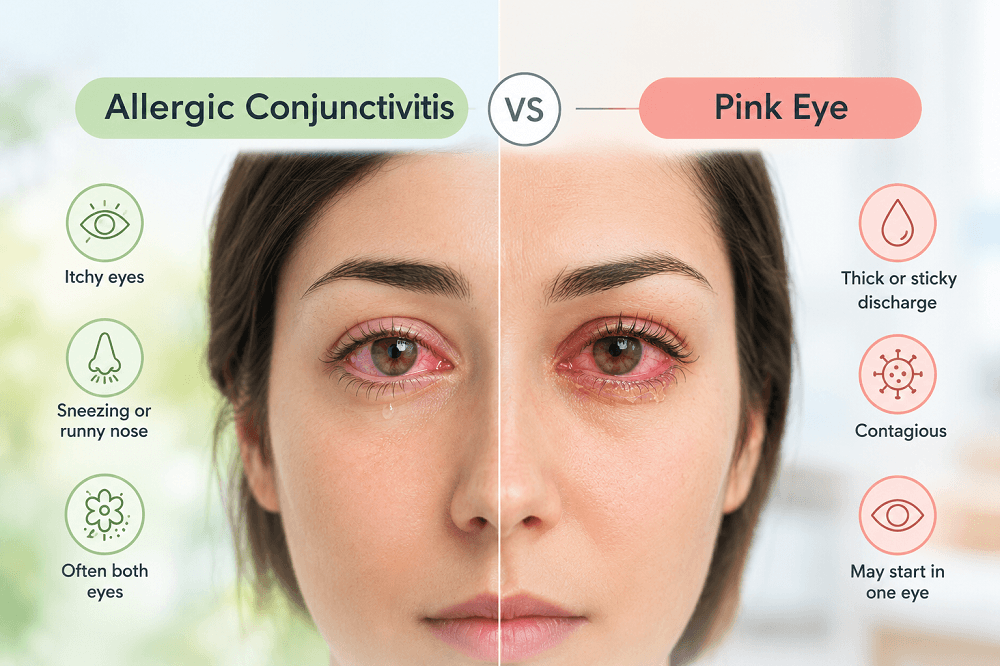
Itching is often one of the most noticeable symptoms. The eye also becomes red, watery, or swollen, and some people also experience sneezing and a runny nose at the same time.
Allergic conjunctivitis is not caused by viruses or bacteria and is not generally considered contagious. Symptoms generally appear during certain seasons, particularly when pollen levels are higher, or throughout the year when the relevant allergen is present.
Allergic Conjunctivitis vs. Pink Eye: Key Differences at a Glance
| Feature | Allergic conjunctivitis | Viral conjunctivitis | Bacterial conjunctivitis |
| Cause | Allergens such as pollen, dust, or pet dander. | virus | Bacteria |
| Itching | Often prominent | Usually less prominent | May occur |
| Discharge | Watery | Often watery | Thick and sticky |
| One or both eyes | Often both | May begin in one eye | One or both |
| Contagious? | No | Yes | Yes |
| Other symptoms | Sneezing and runny nose | Cold-like symptoms may occur | Usually fewer respiratory symptoms |
| Duration | Linked to allergen exposure | Usually 7-14 days | Usually 7-10 days |
These patterns can offer useful clues, but symptoms do not always follow the textbook pattern; a professional assessment will be more helpful when the cause is uncertain.
How To Tell Them Apart: Symptoms Breakdown
Itching: The Hallmark of Allergy
Strong itching is more closely associated with allergic conjunctivitis than infectious conjunctivitis. Someone experiencing an allergy flare-up may feel a strong urge to rub their eyes.
Rubbing your eyes may feel tempting when they are itchy, but it can leave them even more irritated and swollen. A cool compress may help settle the discomfort, and it is best to keep your hands away from your eyes as much as possible. If the itching comes with sneezing or a runny nose, allergies may be behind it.
Type of Discharge
The type of discharge can also help with understanding the cause. Allergic conjunctivitis causes watery eyes, while viral conjunctivitis can also produce clear or watery discharge.
Bacterial conjunctivitis is more likely to cause thicker, sticky discharge, and the eyelids may feel stuck together when you wake up.
Discharge on its own does not tell you exactly what is causing the problem. If your eyes are becoming increasingly red or uncomfortable, or the symptoms are not settling, it is worth speaking with an optometrist.
Swollen Eyelids and Whether One or Both Eyes Are Affected
Allergic reactions often affect both eyes because both are exposed to the same allergen. With infectious conjunctivitis, symptoms may start in one eye and later appear in the other.
Could it Be Dry Eye Instead
Dry eyes can sometimes make the distinction even less obvious. It may cause redness, burning, gritiness, watering, and general irritation without the typical discharge associated with some form of conjunctivitis.
Watering may seem counterintuitive, but an irritated eye can produce reflex tears. These tears do not necessarily address the underlying tear-film imbalance, so the eye can still feel dry or gritty.
Quick comparison: Allergy vs Infection vs Dry Eye
| Features | Allergy | Infection | Dry eye |
| Itching | Often | Less typical | May occur |
| Redness | Common | Common | common |
| Watering | Common | Common | Can occur |
| Gritty feeling | Possible | Possible | Common |
| Thick discharge | Unusual | Common | Unusual |
| Sneezing/runny nose | May occur | May occur with a cold | Not typical |
| Contagious | No | Can be | No |
If the main problem is recurring grittiness or dryness rather than itching and allergy symptoms, dry eye may be worth considering.
How an Optometrist Confirms the Cause
It can be difficult to find the cause from the symptoms alone because several eye conditions overlap. An optometrist considers the appearance of the eye, the patterns of symptoms when they started, and whether there are any known triggers.
Professional assessment is particularly useful if symptoms are persistent, severe and unusual. Significant eye pain, changes in vision, or strong light sensitivity should be assessed rather than assumed to be an allergy.
Relief for Allergic Conjunctivitis
Reducing exposure to known triggers may help manage allergic eye symptoms. During high pollen, for example, limiting exposure where practical and washing your face after spending time outdoors may be useful.
A cool compress over closed eyes can also provide temporary comfort. Avoiding eye rubbing is necessary, even when the itching is difficult to ignore.
Antihistamine and mast-cell stabiliser eye drops can be used for allergic eye symptoms. A pharmacist or optometrist can help determine whether a particular product is suitable, especially when the cause of the redness has not been established.
Allergy Eye Drops: OptiChoice Ketotifen Eye Drops
OptiChoice ketotifen eye drops are intended for the short-term symptomatic relief of seasonal allergic conjunctivitis, including itchy, red and swollen eyes. They contain ketotifen, an antihistamine used to help relieve symptoms associated with an allergic eye response. The product is fast-acting and provides relief for up to 12 hours, with one drop twice daily as directed.
The drops are suitable for adults and children aged 3 years and over. For contact lens wearers, lenses should be removed before using the drops and can be put back in after 15 minutes.
It is important to distinguish allergic conjunctivitis from infectious pink eye. Ketotifen eye drops in Australia are intended for allergic eye symptoms and should not be treated as a substitute for assessment or treatment of infectious conjunctivitis. If the cause of red or irritated eyes is unclear, speaking with an optometrist can help determine the appropriate next step.
Managing Infectious Pink Eye
Management of infectious conjunctivitis depends on whether the infection is viral or bacterial. Viral cases may improve with supportive care as the infection runs its course, while some bacterial cases require prescription antibiotics.
Using a warm compress helps loosen crusting and makes the eye more comfortable. Remove the discharge gently with clean tissues or cotton pads.
Antibiotics are not generally useful for viral infections, which is why identifying the cause matters. Similarly, allergy drops are not a replacement for assessment when an infection is suspected.
Stopping the Spread: Hygiene Tips for Pink Eye
Good hygiene reduces the spread of infectious conjunctivitis.
- Wash your hands regularly.
- Avoid sharing towels, face washers, pillowcases, cosmetics or eye makeup.
- Try not to touch the tip of an eye drop bottle to the eye or surrounding skin.
- Replace the Eye makeup used around an affected eye.
- When an infection is suspected, limiting close contact while symptoms are active will help reduce transmission.
When Eyes Still Feel Dry or Gritty: Where Lubricating Eye Drops Fit In
Allergy flare-ups, rubbing, infection and contact lens wear can leave the eyes feeling dry or uncomfortable. Lubricating drops have a different role from allergy drops: they are designed to support tear-film comfort rather than target an allergic response.
OptiChoice 2mg sodium hyaluronate eye drops are suitable for contact lens wearers. It is meant for mild to moderate dry eyes. OptiChoice 4 mg/mL lubricating eye drops is intended for moderate to more advanced or persistent dry eye.
If dryness or grittiness continues after an allergy flare-up or infection, it may be worth discussing lubricating drops with a pharmacist or optometrist.
Quick Checklist: Allergy or Pink Eye?
When trying to understand what may be behind red or irritated eyes, look at the overall pattern rather than one symptom.
- Strong itching: points towards an allergy.
- Both eyes are affected: it is commonly seen with allergic conjunctivitis.
- Sneezing or a runny nose: can occur alongside allergies.
- Watery discharge with cold symptoms: may occur with viral conjunctivitis.
- Thick or sticky discharge: can be associated with bacterial conjunctivitis.
- Symptoms spreading from one eye to the other: can occur with an infection.
- Gritty or dry feeling: may suggest dry eye.
- Pain or changes in vision: should be assessed rather than assumed to be an allergy.
These signs can help you understand the possibilities, but they cannot establish a diagnosis on their own.
Conclusion
Allergic conjunctivitis, pink eye and dry eye can look alike, but the symptoms and their pattern may offer useful clues. When you are unsure what is causing the irritation, an optometrist or pharmacist can help you work out the next step.
Frequently Asked Questions
Is allergic conjunctivitis contagious?
No. Allergic conjunctivitis is usually caused by a reaction to allergens rather than an infection, so it does not spread from person to person.
Can allergies cause pink eye?
Yes, allergies can cause conjunctivitis, but the cause here is an allergic reaction rather than a virus or bacteria.
How long does allergic conjunctivitis last compared with pink eye?
Allergic symptoms may continue while you are exposed to the trigger. Infectious conjunctivitis may last for several days or longer, depending on the cause.
Can I use allergy eye drops and lubricating eye drops together?
They have different purposes, but check with a pharmacist or optometrist before using them together so you can follow the instructions for both products.
Can I wear contact lenses with allergic conjunctivitis or pink eye?
Contact lenses make irritated eyes feel worse. If pink eye is suspected, ask an eye-care professional when it is appropriate to resume lens wear.