Table of Contents
- Can You Wear Contact Lenses If You Have Dry Eyes?
- Why Contact Lenses Can Make Dry Eyes Feel Worse
- The Two Types of Dry Eye and How They Affect Lens Wear
- What Optometrists Consider When Fitting Lenses for Dry Eyes
- Everyday Habits That Help Contact Lens Wearers with Dry Eyes
- When to See an Optometrist About Contact Lens Discomfort
- Conclusion
- Frequently Asked Questions
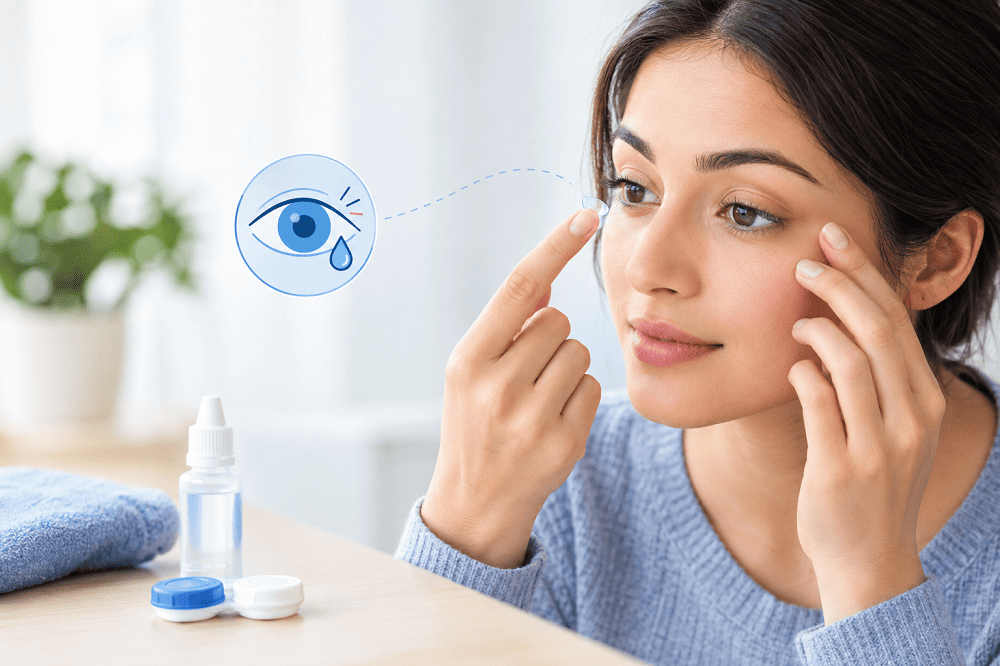
Wearing contact lenses is a very convenient solution compared to glasses, providing users with clear and unobstructed vision without the inconvenience of constantly wearing glasses. But they can also cause some discomfort, especially for those who suffer from dry eyes.
Contact lenses with dry eyes can be complicated, but you don’t have to give up on contact lenses just because you have dry eyes. With the right care and guidance, you can enjoy the benefits of contact lenses while minimising any side effects from dry eyes.
In this blog, we will walk you through what wearers should know about dry eyes and contact lenses.
Can You Wear Contact Lenses If You Have Dry Eyes?
Usually, people with dry eyes can comfortably wear contact lenses when the lens and the care approach are chosen correctly. The outcome depends on whether the type of lens you are wearing matches with your eyes or not.
Modern lenses like silicone hydrogel lenses reduce stress on the ocular surface by allowing more oxygen through to the eyes. Another example is daily disposable lenses; they remove the need for cleaning solutions, which can aggravate sensitive or dry eyes.
Why Contact Lenses Can Make Dry Eyes Feel Worse
Contact lenses disrupt the natural tear film and restrict airflow to the surface of the eye. The lens splits the delicate tear film into two separate layers, one in front of it and one behind it, which causes tears to evaporate much faster.
Also, the cornea needs direct oxygen from the air; the lens behaves as a physical barrier that reduces oxygen flow, stressing the eye tissue and reducing healthy tear production. And the constant rubbing between your lens edge and cornea and your eyelid creates friction, which leads to inflammation and contact lens discomfort.
The Two Types of Dry Eye and How They Affect Lens Wear
There are mainly two types of dry eyes: evaporative dry eye and aqueous dry eye, and they both affect the lens wearer differently.
Evaporative Dry Eye
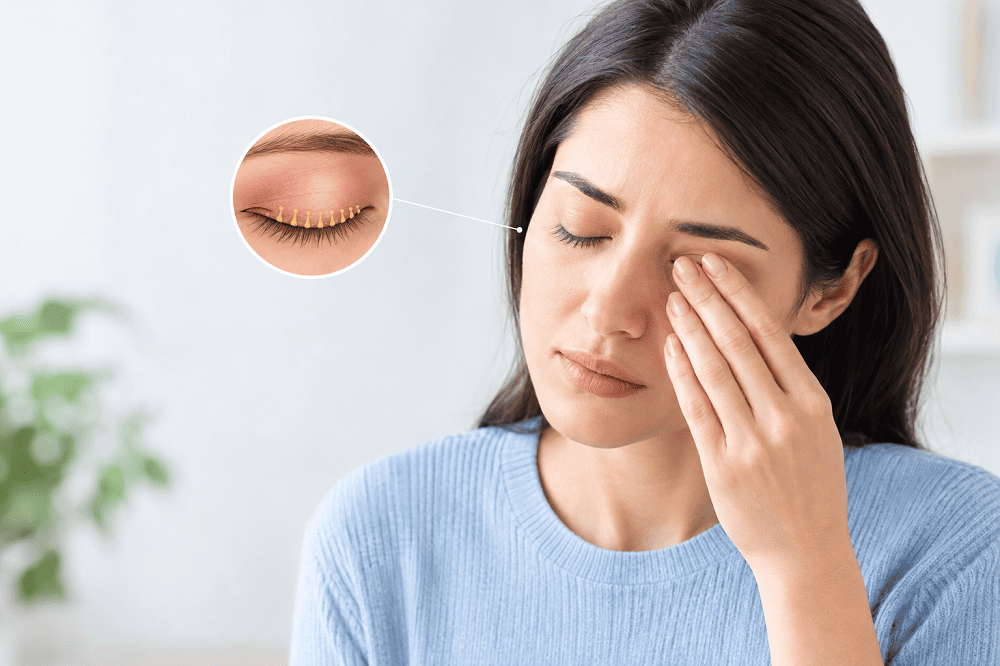
This is the most common type; it happens when your Meibomian glands, oil glands in your eyelid, get blocked or do not make enough oil, which affects the lipid(oily) layer of the tear film, causing your tears to dry up fast.
Contact lenses can intensify this condition by absorbing the tear film’s moisture, leading to increased tear evaporation and dryness.
Aqueous Tear-Deficient Dry Eye
This happens when your lacrimal glands do not make enough aqueous(watery) fluid to hydrate the eye.
The lack of tear volume leads to increased friction between the lens and cornea, causing irritation. Due to insufficient lubrication, people may find contact lenses uncomfortable to wear.
What Optometrists Consider When Fitting Lenses for Dry Eyes
Optometrists usually look at tear film quality, lens material, and lens design when fitting lenses for dry eyes.
Tear Film Quality
Optometrists measure tear break-up time and tear volume to assess how quickly tears evaporate, and they check the edge of your eyelid to see if your oil glands are blocked, which causes rapid tear drying.
Lens Material and Water Content
Doctors use materials like silicone hydrogel for your lens; these advanced materials let a lot of oxygen pass through the cornea to keep the eye healthy. They use lenses with low water content or with specialised wetting agents, which is often better than those high-water-content lenses that absorb moisture from your eye.
Lens Design and Speciality Options
Optometrists recommend lenses with thinner edges and uniform curves that reduce friction during blinking. And in severe dry eyes, they recommend Scleral lenses; these are large and gas-permeable vaults over the cornea and trap a constant liquid reservoir to bathe the eye.
Everyday Habits That Help Contact Lens Wearers with Dry Eyes
Incorporating some daily habits into your day-to-day life can help you soothe your eyes, such as lubricating frequently, taking breaks, staying hydrated, and more.
Lubrication and Hydration
Eye drops for contact lens wearers are like 8 hours of sleep. They help you go through your day a bit more smoothly. It is important to apply contact lens-safe, preservative-free lubricating drops throughout your day. And drink plenty of water daily to support overall tear production and systemic hydration.
Screen and Blinking Habits
For every 20 minutes of screen time, look at an object that is 20 feet away from you for 20 seconds.
Incomplete blinking increases dryness and reduces moisture across the surface of your eye. Blink fully and frequently while reading or working on a screen, as screens reduce blinking.
Wear Time and Hygiene Routine
Give your eyes frequent breaks by switching to glasses in the evening or on long rest days, and always remove your lenses while you sleep to allow your cornea to get adequate oxygen.
Follow a strict hygiene routine, wash and dry your hands before you touch your eyes or the lens, and use fresh cleaning solution every time.
When to See an Optometrist About Contact Lens Discomfort
Signs That You Need to See an Optometrist
- Severe pain: If you are experiencing a constant ache in your eye and it’s not going away, your eyes need urgent medical examination.
- Sudden vision changes: If you are experiencing blurry and cloudy vision that is not getting clear even after blinking multiple times
- Extreme redness and light sensitivity: If your eyes are looking very red and are acting extremely sensitive in bright light.
- Shorter wearing time: You can only wear your contact lenses for a short time before they start to bother you.
Conclusion
Even if you have severe dry eyes, you can have the convenience and clarity of contact lenses with advanced lens designs and technology. You need to go through the dry eye symptoms checklist, and if you are facing any of these symptoms, consult an optometrist, and they will help you out with the right solution for your eyes. And with regular eye examinations and professional fittings, you can minimize the complications and maximise comfort.
Frequently Asked Questions
What type of contact lenses are best for dry eyes?
Daily disposable lenses made from silicone hydrogel are best for dry eyes. Using a fresh lens every day prevents irritating lipid deposits, which can cause irritation, from building up.
Can I use lubricating eye drops while wearing contact lenses?
Yes, you can use your lubricating drops while wearing contact lenses if the packaging says “safe for contact lenses” or “rewetting drops”. You can’t use your standard dry eye drops while wearing lenses.
Should I stop wearing contact lenses if I have dry eyes?
No, you do not need to stop wearing your contact lenses if you have dry eyes. You should consult an optometrist to evaluate your severity and find the right type of lens for you.
Sources:
- https://beyondeyecare.com.au/contact-lenses-dry-eyes/
- https://www.martinseyecare.com.au/dry-eye-treatment-tasmania/contact-lenses-dry-eyes/
- https://juniceyecare.com.au/dry-eyes-contact-lens/