
Table of Contents
- Are Digital Eye Strain and Dry Eye the Same Thing?
- What Digital Eye Strain Feels Like
- What Dry Eye Feels Like
- When to See an Optometrist?
- Conclusion
- Frequently Asked Questions
In this digital world, we spend most of our time in front of a screen, whether it is for work, entertainment, or just to kill time; with this excessive screen time, a person can experience discomfort, redness, irritation, and blurred vision in their eyes.
While these are the same symptoms as dry eye syndrome, this can also be digital eye strain, and it is important to understand the difference between digital eye strain and dry eye for effective and appropriate treatment for your eyes. Misinterpreting your condition can lead to mistreatment and prolonged discomfort.
In today’s blog, we are gonna discuss causes, symptoms and key differences between dry eye syndrome and digital eye strain.
Are Digital Eye Strain and Dry Eye the Same Thing?
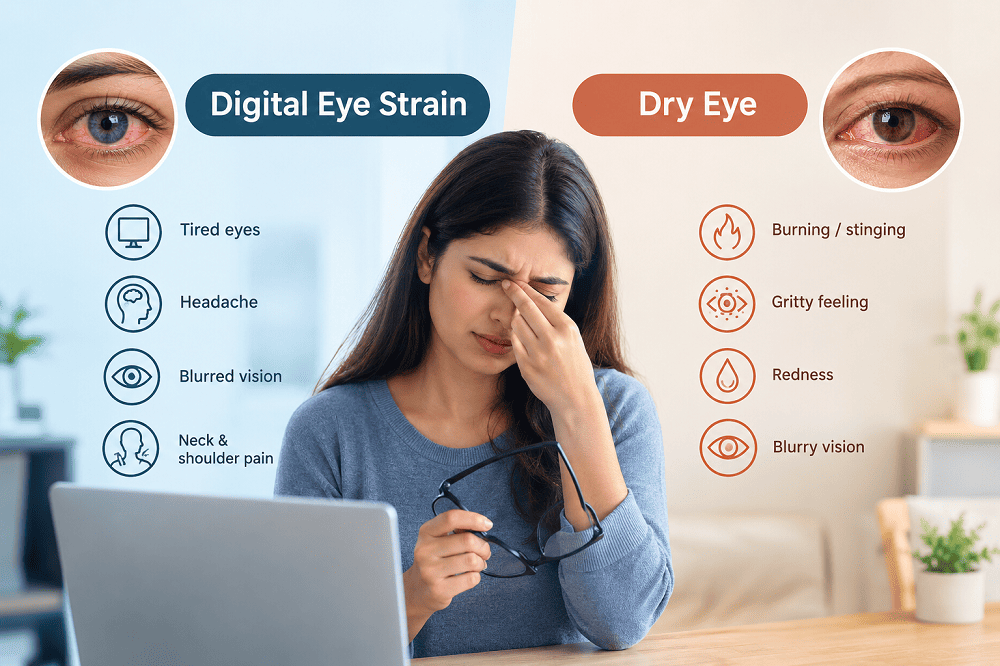
Digital eye strain and dry eye syndrome are closely connected, but they are not the same thing. While digital eye strain occurs after prolonged use of computers, phones, and any screen and causes tired eyes, blurred vision, headaches, and neck and shoulder pain, it can be improved by rest or a break from screens.
Whereas dry eye syndrome is a chronic, recurring condition where your eyes do not produce enough tears, or they evaporate quickly, giving you a burning, gritty, and sandy feeling in your eyes, and it requires medical treatment.
What Digital Eye Strain Feels Like
Digital eye strain is also called Computer Vision Syndrome(CVS) and is caused by using a digital screen for long hours without any breaks. You may experience tired or heavy eyes, headaches, temporary blurred vision, and neck and shoulder pain.
The main causes of CVS are focusing and refocusing on pixels, poor lighting, screen usage at night or in the dark, screen glare, and holding the device too close to your eyes.
Symptoms Beyond The Eyes
Digital eye strain can also cause physical symptoms beyond the eyes, like:
- Neck and shoulder pain: Leaning forward toward a screen strains the upper back and neck muscles.
- Headaches: Pain often wraps around the temples or forehead due to tight muscles and visual fatigue.
- Back pain: Bad chair posture while working on your computer can cause lower and mid-back discomfort.
- Sleep disturbance: Exposure to blue light late at night interferes with your natural sleep cycle, causing sleep disturbance.
Focusing Difficulty and Eye Fatigue
Continuous screen focus forces your eye muscles to work hard and cuts your blink rate in half, causing focusing difficulty and eye fatigue. Pixels on a digital screen require your eyes to constantly focus and refocus, which overworks your ocular muscles and drops your blink rate to half, drying out the surface of your eyes.
But, as said above, CVS is a temporary condition and can be improved by some simple relief techniques like taking a small break from your screen every 20 minutes, placing your screen about an arm’s length away, forcing yourself to fully blink more often, and using lubricating eye drops to manage dryness.
What Dry Eye Feels Like
When your tear glands do not produce enough quality tears, or they evaporate too fast, Dry eyes occur. Unlike dry eye syndrome, this is a chronic, recurring condition that does require medical attention. A dry eye symptoms checklist usually is:
- Stinging or burning in your eyes
- Gritiness
- Redness
- Water eyes
- Blurry vision
- Light sensitivity
- Stringy mucus
- Eye fatigue
When to See an Optometrist?
Generally, digital eye strain is temporary and can be improved by a few basic relief techniques and a few habit changes. Still, in some cases the symptoms are severe and indicate dry eye and require medical attention.
If you are experiencing severe or sharp eye pain, sudden dramatic changes in vision, thick discharge or an eye infection, and your symptoms are getting worse despite using lubricating tear drops and taking screen breaks, you need to see an optometrist.
Conclusion
Digital eye strain vs dry eye symptoms do overlap, but both are different conditions and require different treatments, and you should not take any of them lightly. Understanding the difference between them helps you assess the condition properly and get the treatment accordingly.
If you are experiencing any of the discussed symptoms, taking them lightly will only worsen the pain and discomfort. Visit an optometrist or ophthalmologist and get your eyes diagnosed.
Frequently Asked Questions
Is Digital Eye Strain the Same as Dry Eye?
No, while their symptoms overlap and they are closely related, digital eye strain and dry eye are not the same condition. Digital eye strain is a temporary condition which is caused by prolonged screen usage, whereas dry eye is a chronic, recurring condition.
Can Digital Eye Strain Cause Dry Eyes?
Yes, when you look at a screen for a long time, you blink half as often, which causes tears to dry out faster, leading to dry eyes and irritation.
Why Do My Eyes Hurt but My Head Also Aches After Screen Time?
When your eyes hurt due to digital eye strain, the pain also wraps around the temples and forehead due to tight muscles and visual fatigue, causing headaches.
Does Fixing My Dry Eye Also Fix My Digital Eye Strain?
Fixing dry eyes will help relieve discomfort, but it will not completely fix your digital eye strain. To truly fix digital eye strain, you need to make a few changes in your lifestyle, like taking breaks while using the screen, keeping your screen at arm’s length, and forcing yourself to blink while using the screen.
Sources:
- https://pmc.ncbi.nlm.nih.gov/articles/PMC9434525/
- https://visioneyeinstitute.com.au/eyematters/digital-eye-strain/
- https://www.eyesymmetryvision.com/dry-eye-optometrist/digital-eye-strain-and-dry-eye-syndrome/
- https://my.clevelandclinic.org/health/diseases/24802-computer-vision-syndrome