Table of Contents
- Can You Get Dry Eyes in Your 20s and 30s?
- Why Dry Eye Often Feels Worse When You Are Younger
- Common Triggers Behind Dry Eye in Your 20s and 30s
- Conclusion
- Frequently Asked Questions
If you are in your 20s or 30s, and your eyes are burning or stinging, feel constantly scratchy and gritty, and sometimes your vision randomly goes blurry, then you are not alone. Dry eye in young adults is currently skyrocketing due to many factors, such as excessive screen time, daily use of contact lenses, and the modern environment.
Can You Get Dry Eyes in Your 20s and 30s?
While dry eyes are more common in people over 50, in recent times, eye doctors are seeing people with dry eye at a young age more often than before, and there are multiple factors contributing to this early-age dry eye disease.
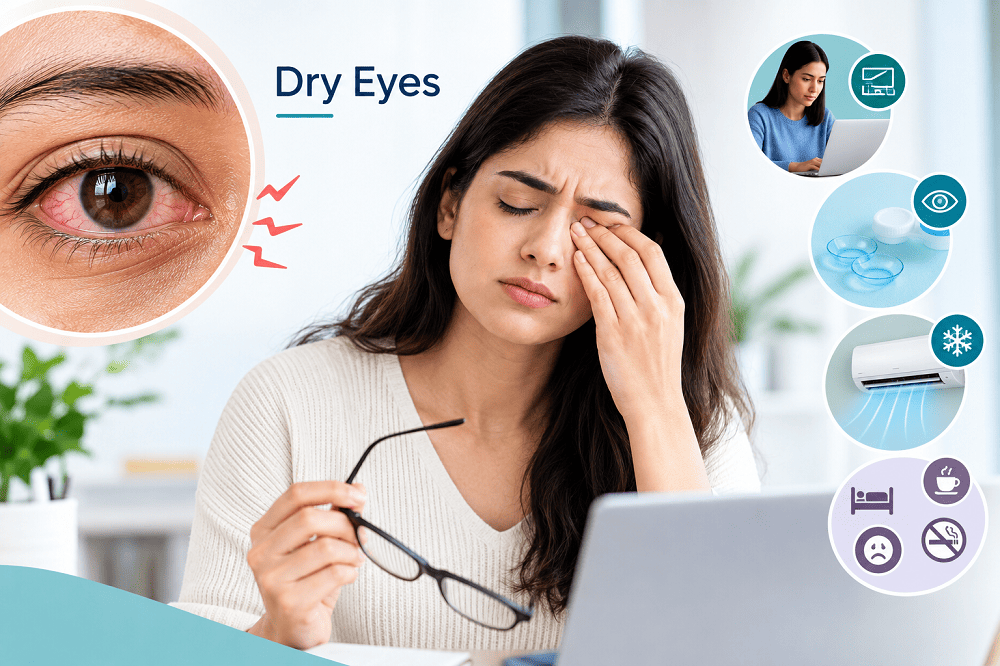
The common symptoms of dry eyes are: A burning or stinging sensation, feeling like there is sand in your eye, watery eyes, tired eyes or eye strain, and blurry and fluctuating vision. If you are experiencing any of these problems, you might have dry eyes and should consult an eye doctor.
Why Dry Eye Often Feels Worse When You Are Younger
At a younger age, dry eye feels very painful because heavy use of digital devices and incomplete blinking cause rapid tear evaporation despite having healthy tear glands.
A Thinner Tear Film, More Noticeable Symptoms
Young patients with dry eyes have a thinner lipid(oil) layer on top of their tears, which stops moisture from evaporating too fast; without that strong oil layer, the watery part of the tear vanishes fast. This leaves dry spots on the surface of the eye. Also, young eyes have very active corneal nerves; when tears dry up and expose those nerve endings, the stinging and burning feel very sharp.
Blinking Less and Less Completely
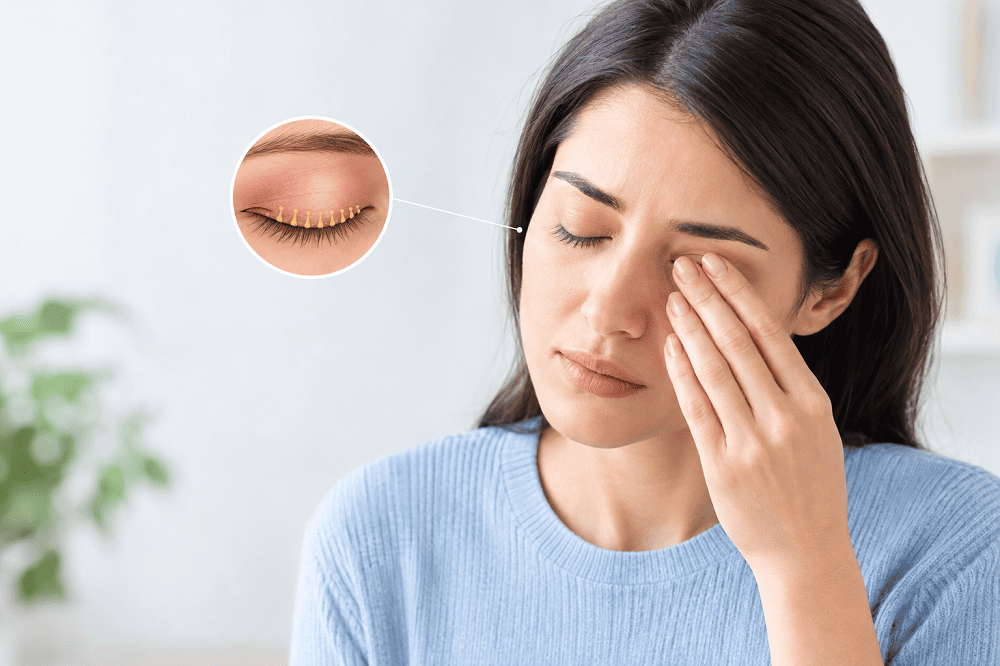
People usually blink about 15 times a minute, but that rate drops to 5-7 times a minute when you are looking at any screen; a pattern we break down in why eyes burn after screen time. Eyelids have these tiny oil glands called meibomian glands on their edge; a full eye blink squeezes these glands to release an oil layer that stops tears from evaporating.
Concentrating on the screen causes partial blinking where the eyelids do not touch, leaving the lower part of the eye uncovered by oil, causing the tear film to break up and evaporate fast.
Common Triggers Behind Dry Eye in Your 20s and 30s
Experiencing dry eye in young adults has become very common, and here are the possible reasons behind this change:
- Excessive screen time: Constantly staring at phones, tablets, and computers cuts your blink rate to about half, making your tears evaporate faster.
- Contact lenses: Wearing contact lenses all day absorbs moisture from the eye’s surface and irritates the tear film.
- Environmental conditions: Sitting in an air-conditioned or heated room for a very long time dries out the moisture from your eyes.
- Lifestyle factors: Lack of sleep, high stress, high caffeine intake, and smoking can worsen the dryness in your eyes.
With a few lifestyle changes, like taking regular breaks from the screen, giving your eyes a break by switching to glasses for a few hours a day, sitting a bit away from the air conditioner, not consuming unnecessary caffeine, or smoking less, this is completely preventable.
If you are starting to feel like you have dry eyes, you can use the 2mg eye drops for dry eyes (0.2% concentrated drops) for lubrication. Also, if you need to use these drops 5-6 times a day, you should consult an optometrist.
Conclusion
Having dry eye in your 20s and 30s is more common than you might think, due to various reasons. But with the right approach, it is preventable. If you are experiencing any of the symptoms discussed in the blog, you should first book an appointment with an optometrist or an ophthalmologist for healthy eye health and early prevention, because your dry eyes should not become a hindrance in your golden years.
Frequently Asked Questions
Is Dry Eye Normal in Your 20s?
Yes, while dry eyes are more common in people over 50, in recent times, experiencing dry eyes is becoming increasingly common.
Why Does Dry Eye Feel Worse When You’re Young?
Because young patients have a thinner lipid layer on top of their tears, the watery part of the tear evaporates faster, causing dry spots on the eye surface. Young people also have very active corneal nerves; when tears dry up and expose those nerve endings, the stinging and burning feel very sharp.
Can Screen Time Alone Cause Dry Eye at a Young Age?
Yes, excessive screen time alone can cause dry eye at a young age by reducing how often you blink to about half or less.
Does Dry Eye in Young People Go Away on Its Own?
Dry eye in young people can go away on its own if a short-term factor causes it, but chronic dry eye requires you to book an appointment with an eye doctor.
Sources:
- https://pmc.ncbi.nlm.nih.gov/articles/PMC8861619/
- https://trappe.refocuseyedoctors.com/article/agerelated-dry-eye/
- https://www.optometrists.org/general-practice-optometry/guide-to-eye-conditions/dry-eye/what-is-dry-eye-syndrome/dry-eyes-and-aging/